Natural Stone Flooring with Underfloor Heating: What to Consider
Natural stone flooring with underfloor heating can combine the appearance of marble, limestone or travertine with a warm floor surface. The result depends on selecting a suitable stone and coordinating it with the complete heating and installation system.
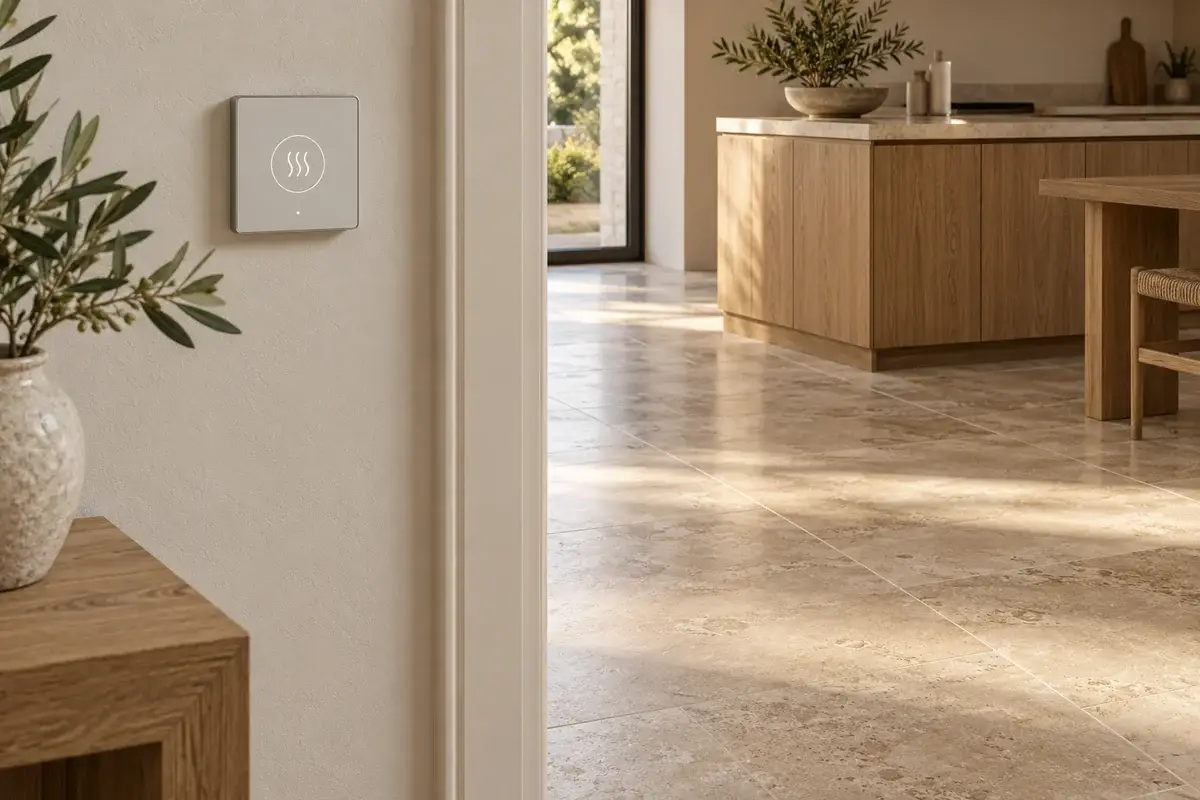
Natural stone flooring with underfloor heating can combine the appearance of marble, limestone or travertine with a warm floor surface. The result depends on selecting a suitable stone and coordinating it with the complete heating and installation system.
Stone thickness, insulation, substrate preparation, setting materials and temperature controls all influence performance. Confirm these elements together before ordering the flooring, rather than assessing the stone separately from the construction beneath it.
Can Natural Stone Be Used with Underfloor Heating?
Natural stone can be used with compatible electric and water-based underfloor heating systems. Stone can transfer heat effectively to the floor surface, but suitability must still be confirmed for the selected product and complete assembly.
Two terms help explain how a heated floor works:
- Thermal conductivity describes how readily a material conducts heat.
- Thermal resistance describes how strongly a layer resists heat passing through it.
The Natural Stone Institute publishes reference information on these properties in its thermal conductivity and R-value bulletin. Values differ between stones, and thermal resistance also depends on thickness. R-Value for Natural Stone
For a project specification, assess the complete floor build-up. The stone is only one layer between the heating source and the room.
Choosing Marble, Limestone or Travertine
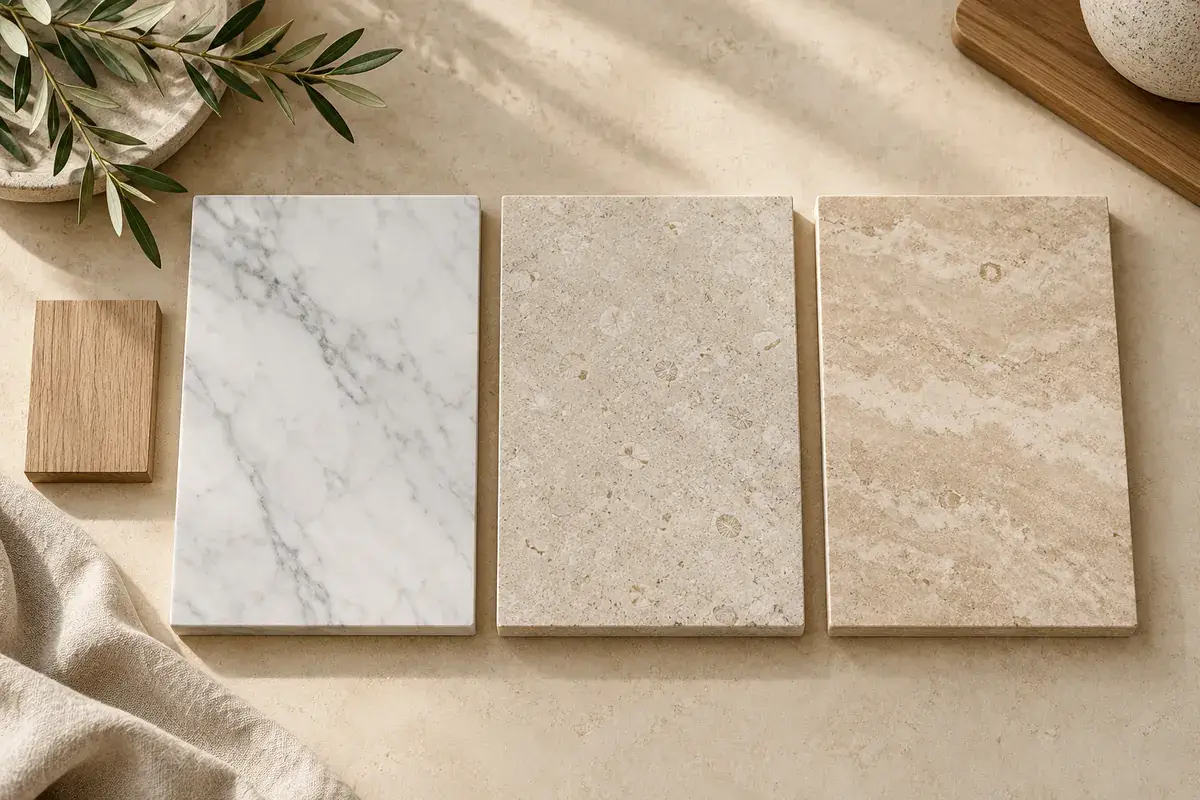
Start with the appearance, format and maintenance requirements of the floor. Then ask the stone supplier and heating designer to confirm compatibility with the proposed system.
Marble Underfloor Heating
Marble offers a range of colors, veining and finishes for living rooms, bathrooms and other interior spaces. Compare selections within the Tureks marble collection before discussing the proposed floor assembly.
The enquiry should identify the exact stone, dimensions, thickness and any backing treatment. Certain moisture-sensitive stones or resin-backed products may require special setting materials. Confirm adhesive compatibility with the stone supplier and installation-material manufacturer before installation.
Limestone Underfloor Heating
Limestone can provide a quieter visual foundation, although color, grain and markings vary between selections. Review the Tureks limestone range with the intended room and finish in mind.
Do not assign the same thermal properties to every limestone. Use relevant product information where available and have the heating designer account for the specified thickness.
Travertine Underfloor Heating
Travertine introduces characteristic pores and natural movement. Alongside the stone selection, confirm whether the surface will be filled or unfilled.
Explore the Tureks travertine collections and discuss the filling, finish and installation requirements. Approval should cover the finished product, including any treatment or backing, rather than the stone name alone.
How Stone Thickness Affects the Floor Build-Up
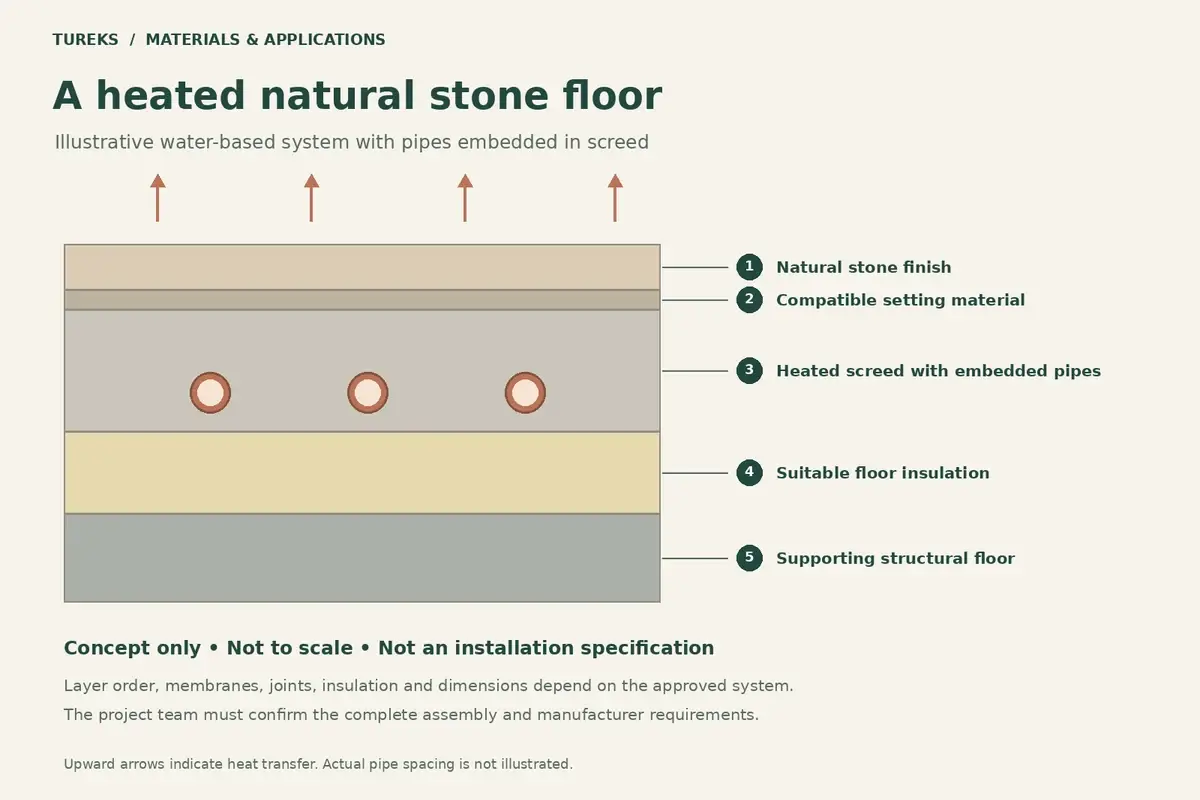
There is no single ideal stone thickness for every heated floor. Thickness must satisfy the installation requirements while fitting the thermal design and available construction depth.
For the same material, increasing thickness increases the thermal resistance of the stone layer. However, reducing thickness without checking support and installation requirements is not an appropriate shortcut.
Coordinate these elements before finalizing the specification:
| Floor element | What to confirm |
|---|---|
| Natural stone | Selection, thickness, dimensions and finish |
| Setting material | Compatibility with the stone and heating assembly |
| Membrane or underlayment | Whether required and where it belongs |
| Heating layer | System type and specified installation position |
| Screed or supporting layer | Condition, thickness and preparation requirements |
| Insulation | Type, position and compatibility with the assembly |
| Finished floor level | Connections to doors, thresholds and adjacent rooms |
The order and presence of these layers vary between systems. Use the heating manufacturer’s approved construction detail rather than treating this table as an installation sequence.
Electric or Water-Based Underfloor Heating?
Both approaches can be considered beneath suitable stone flooring. The choice depends on the building, room requirements, available depth and heating strategy.
Electric Systems
Electric systems use heating cables or mats. Some assemblies combine the cable carrier with an uncoupling membrane, while others use a different arrangement.
Confirm that the selected system supports the proposed stone dimensions and installation method. Coordinate cable positioning, floor sensors and electrical work with the responsible installer.
Water-Based Systems
Water-based, or hydronic, systems circulate heated water through pipes. Their construction may involve a screed or a compatible dry-panel assembly.
The heating designer should assess room heat loss, usable heated area, insulation and the floor covering. A suitable stone finish does not establish whether the system can meet the room’s heating demand.
Compatible stone coverings can be used with either approach. Confirm suitability for the complete assembly and select the system according to the project requirements.
Coordinate the Substrate, Adhesive and Stone
A heated stone floor needs an installation specification covering the entire assembly. Identify who will approve substrate readiness, material compatibility and the installation detail before work begins.
Check the Supporting Surface
The substrate should meet the requirements for strength, stability, flatness and moisture condition specified for the system. Existing cracks or movement require assessment before the stone is installed.
In refurbishment projects, investigate the existing construction rather than assuming the visible floor can support a new assembly. Changes in floor height should also be resolved early.
Specify Compatible Setting Materials
The word “flexible” alone does not establish that an adhesive is suitable. The selected product must work with the stone, substrate, membrane and heating system.
Confirm any special requirements for light-colored, translucent, moisture-sensitive or backed stone. Request written compatibility guidance where the combination needs clarification.
Assess Membrane Requirements
An uncoupling membrane may be part of the specified assembly. Its role and installation position depend on the system.
It does not remove the need for substrate assessment, suitable setting materials or movement joints. Follow the requirements of the complete approved assembly.
Plan Movement Joints Before Installation
Grout joints and movement joints serve different purposes. A regular grouted joint should not be treated as a substitute for a joint designed to accommodate movement.
Show movement joints on the flooring drawings and coordinate them with room boundaries, structural joints and the tile layout. Include perimeter details so the floor is not restrained against adjoining construction.
Coordinate movement joints and perimeter connections with the heating layout. Heating cables should not cross movement joints. The exact arrangement should follow the chosen system’s installation instructions and applicable project requirements.
Controls, Floor Sensors and Interior Layout
Controls should be considered alongside the room layout. Confirm the thermostat arrangement, floor sensor requirements and operating limits before installation.
Discuss rugs and floor-level furniture with the heating supplier. Thick coverings can restrict upward heat transfer. Confirm any restrictions on rugs, furniture placement and floor sensor areas for the selected system.
This is particularly relevant when an interior design includes large rugs over much of the heated floor. Share the planned furniture and rug positions with the heating designer.
Operating costs also depend on more than the floor material. Insulation, heat loss, energy source, controls and usage patterns all contribute. Avoid estimating savings from the stone selection alone.
Curing and Commissioning the Heated Floor
Do not switch on the system simply because installation appears complete. Screeds, adhesives and other materials must reach the condition required by their manufacturers.
Allow adhesives and screeds to complete their specified curing and drying periods before activating the heating. The required waiting period depends on the materials and construction. Follow the installation-material and heating-system manufacturers’ instructions.
Agree on a commissioning procedure that records:
- Required curing and drying periods.
- System tests specified during installation.
- Thermostat and floor sensor checks.
- The permitted initial operating settings.
- Any required gradual temperature increase.
- Final operating limits and user instructions.
Follow the project-specific procedure rather than applying a universal waiting period or temperature setting.
What to Confirm Before Ordering Natural Stone
A coordinated enquiry helps the stone supplier evaluate the request. Share the room use, heating system and preliminary floor detail alongside your preferred appearance.
| Question | Information to request |
|---|---|
| Is the exact stone suitable? | Confirmation for the intended application and assembly |
| Is the thickness agreed? | Coordination between stone supply and floor design |
| Are treatments documented? | Details of filling, backing or other relevant processing |
| Are installation materials compatible? | Approved adhesive, membrane and grout requirements |
| Are joints resolved? | Drawings showing movement and perimeter details |
| Is commissioning planned? | Written curing, testing and activation instructions |
Review physical samples for appearance and product documentation for technical suitability. For finish comparisons, consult the natural stone finishes selection guide.