Limestone vs Travertine: How to Choose for Interior Floors
Limestone vs travertine is a comparison between closely related natural stones with distinct surface characteristics. Both can be considered for interior flooring, but the right choice depends on the specific stone, finish, room conditions and maintenance expectations.
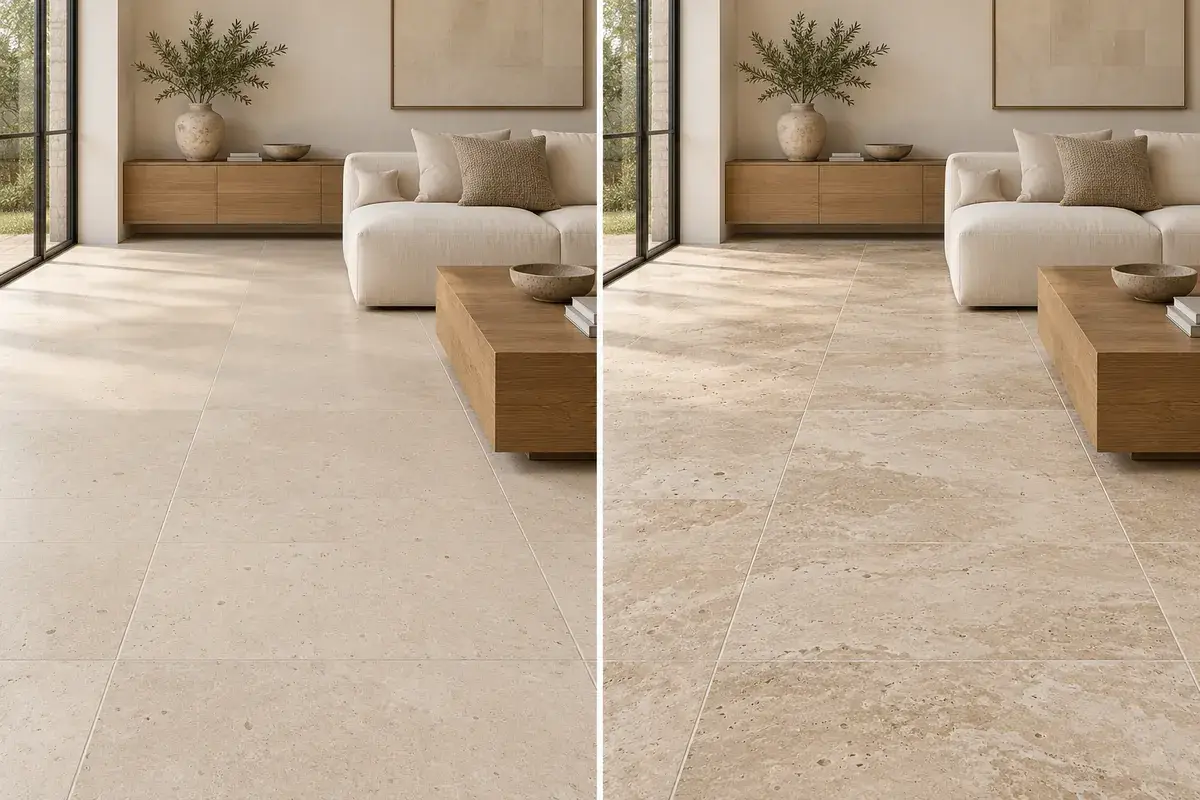
Limestone vs travertine is a comparison between closely related natural stones with distinct surface characteristics. Both can be considered for interior flooring, but the right choice depends on the specific stone, finish, room conditions and maintenance expectations.
Limestone selections can create a visually understated floor, while travertine often introduces more visible pores, movement or layered patterns. These are starting points rather than fixed rules. Comparing representative samples and product information will tell you more than choosing by the material name alone.
Limestone vs Travertine: What Is the Difference?
Limestone is a sedimentary rock that commonly forms through the accumulation of calcium carbonate, including material from shells and other organisms. Travertine is a form of limestone deposited from mineral-rich water, often associated with springs.
Although they belong to the same geological family, the stone industry usually presents them as separate commercial categories. The Natural Stone Institute discusses their shared composition and the considerable variation within both groups in its limestone and travertine overview.
For a flooring project, the practical distinction involves more than geology:
| Selection factor | Limestone | Travertine |
|---|---|---|
| Visual character | May feature fine grain, fossils, mottling or stronger movement | Often shows pores, layered movement or a cloudy pattern |
| Surface options | Available finishes depend on the selected stone | May be supplied filled or unfilled, with different finishes |
| Color selection | Includes pale, beige, gray and darker varieties | Common selections include ivory, silver and brown tones |
| Maintenance assessment | Depends on the stone, finish and service conditions | Also requires consideration of open pores and filling |
| Final approval | Review several pieces and relevant product data | Review several pieces, including the fill and cutting direction |
Explore Tureks’ limestone selections and travertine collections to compare available colors and product formats.

Comparing Texture, Color and Natural Variation
A small sample can help establish a color direction, but it cannot show the full appearance of a finished floor. Review several pieces together before deciding how either material will work in your interior.
Limestone: Evaluate Grain and Tonal Movement
Limestone can suit interiors where the floor should complement furniture, timber and other architectural materials. However, its appearance varies considerably between selections. Some stones have subtle tonal changes, while others contain visible fossils or stronger markings.
For example, Bosphorus Honed Limestone Tile provides a specific product to review when comparing a honed limestone surface. Confirm the available format and suitability for your intended application before specifying it.
Travertine: Review Pores and Pattern Direction
Travertine’s natural cavities are an important part of its appearance. Depending on the product, these may remain open or be filled during processing.
Cutting direction also changes the visual result. Vein-cut travertine typically emphasizes linear movement, while cross-cut material presents a more cloudlike pattern. Ask to see the proposed cutting direction across several pieces before approving the layout.
Consider whether you want the flooring to establish a strong visual direction or create a more varied surface. Neither approach is limited to traditional interiors.

Filled Travertine and Limestone: Surface Differences
Filling and finishing are different processes. Filling addresses cavities in the stone. Honing, polishing or brushing changes the surface finish.
Filled travertine can therefore also have a honed finish. Tureks’ Ivory Honed Travertine Tile is one product to review when exploring this combination. Confirm the filling specification with the supplier, as the fill is part of the finished product’s appearance and maintenance requirements.
Unfilled travertine retains open cavities. If you prefer this character, discuss how the installation process will treat those cavities and how the floor will be cleaned.
When comparing samples, inspect:
- The color difference between the stone and filled areas.
- The size and distribution of visible pores.
- The surface under daylight and artificial lighting.
- The edge detail and proposed grout joint.
- The appearance of several adjoining tiles.
A limestone sample should receive the same attention. A visually smooth surface does not, by itself, establish absorption, durability or suitability.
Which Stone Suits Different Interior Rooms?
Start with how the room will be used. Foot traffic, tracked-in dirt, spills and cleaning routines should guide the selection alongside appearance.
Living Rooms and Bedrooms
For living areas, compare the floor with upholstery, cabinetry and wall finishes. A stone that looks neutral in isolation may appear warmer, cooler or more varied beside other materials.
Lay several samples flat rather than assessing them only upright. View them from the room entrance and from typical seating positions.
Hallways and Entrances
Hallways and entrances require particular attention to traffic and tracked-in grit. Ask for information relevant to the exact stone and proposed finish.
Include entrance matting and routine cleaning in the design discussion. Neither limestone nor travertine should be selected for a busy entrance solely because another product in the same category performed well elsewhere.
Kitchens and Bathrooms
Spills and wet conditions make product selection more demanding. Both stone families can be sensitive to acidic substances, so maintenance expectations should be clear before purchase.
A bathroom floor also requires appropriate assessment of slip performance, drainage and the installation system. A matte or textured appearance alone does not confirm suitability for a wet area.
For a broader explanation of surface options, read the natural stone finishes selection guide.
Limestone vs Travertine Maintenance
Both materials require a care routine appropriate to their composition and finish. The Natural Stone Institute identifies limestone and travertine as carbonate-based stones that can be altered by mild acids.
Use Suitable Cleaning Products
Remove loose grit regularly and clean with a product suitable for the selected stone. Avoid vinegar, lemon-based cleaners and other acidic products.
The Natural Stone Institute recommends neutral cleaning products and explains that excessive cleaner concentration can leave residue. Follow the product instructions and rinse as directed. Its natural stone care guidance provides a useful reference for establishing a cleaning routine.
Assess Sealing Requirements Individually
Ask the supplier whether an impregnating treatment is appropriate for the particular stone, finish and application. Agree on the product and maintenance procedure before installation.
Sealing does not make natural stone stain-proof. It can improve resistance to staining, but it should not be treated as protection against every type of surface damage.
Include Filled Areas in Maintenance Planning
For filled travertine, ask how the filling should be cleaned and what to do if a filled area requires attention later. For unfilled material, consider the work involved in removing dirt from open cavities.
These details help establish realistic expectations before the floor enters daily use.
Is Limestone or Travertine More Expensive?
Neither material is always the less expensive option. Prices depend on the selection, format, finish, filling, quantity and delivery requirements.
Compare quotations with the same scope:
| Cost item | What to confirm |
|---|---|
| Stone supply | Selection, dimensions, thickness and finish |
| Processing | Filling, edge details and special cutting |
| Quantity | Net area, cutting allowance and replacement stock |
| Installation | Substrate preparation, setting materials and labor |
| Protection | Any specified treatment and initial cleaning |
| Delivery | Packing, transport and site handling |
A lower tile price may not produce a lower completed-floor cost. Request a comparison based on the same project requirements.
Questions to Ask Before Ordering Samples
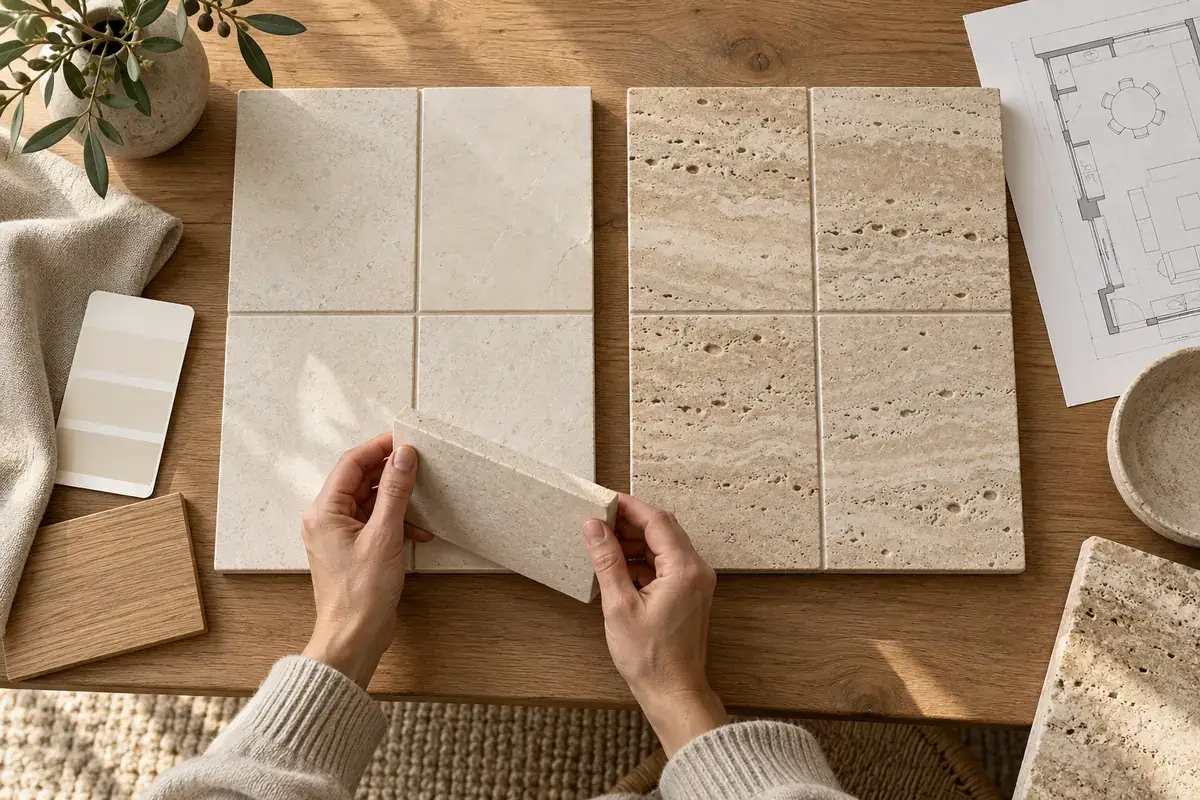
A useful sample request explains the intended application. Share the room type, approximate area, preferred color range and proposed tile dimensions.
Before placing the order, confirm:
- Is this exact product recommended for the intended floor?
- Which finishes and formats are available?
- Can the supplier provide representative range samples?
- Is the travertine filled or unfilled?
- What product data is available for the application?
- What installation and cleaning requirements apply?
- How much additional material should be allowed for cutting and future replacement?
For larger areas, consider a grouted sample panel. This shows the relationship between adjoining pieces, joint color and the selected finish more clearly than a single loose tile.