Marble vs Travertine for Outdoor Applications
Choosing between marble and travertine for an outdoor project requires more than comparing their color and appearance. Exterior stone is exposed to rain, sunlight, temperature changes, dirt, pool chemicals and, in some climates, repeated freezing and thawing.
Table of Contents
- What Is the Difference Between Marble and Travertine?
- Can Marble Be Used Outdoors?
- Can Travertine Be Used Outdoors?
- Marble vs Travertine for Outdoor Flooring
- Water Absorption and Moisture Exposure
- Weather Resistance
- Freeze-Thaw Conditions
- Climate-Based Selection Table
- Slip Resistance in Outdoor Areas
- Marble vs Travertine for Pool Decks
- Marble Pool Deck Considerations
- Travertine Pool Deck Considerations
- Marble vs Travertine for Terraces and Patios
- Marble vs Travertine for Walkways
- Marble vs Travertine for Exterior Steps
- Marble vs Travertine for Façades
- How Surface Finish Affects Outdoor Performance
- Polished Finish
- Honed Finish
- Tumbled Finish
- Brushed Finish
- Sandblasted Finish
- Textured Finish
- Filled or Unfilled Travertine Outdoors
- Filled Travertine
- Unfilled Travertine
- Outdoor Stone Thickness
- Installation and Drainage Requirements
- Cleaning and Maintenance
- Marble vs Travertine Selection Summary
- Outdoor Natural Stone Selection Checklist
- Frequently Asked Questions
- Choose Outdoor Marble and Travertine With Tureks
Need help choosing the right stone?
Let our expert team help you choose the ideal natural stone for your project.
Choosing between marble and travertine for an outdoor project requires more than comparing their color and appearance. Exterior stone is exposed to rain, sunlight, temperature changes, dirt, pool chemicals and, in some climates, repeated freezing and thawing.
Both materials can be used for terraces, pool surrounds, walkways, courtyards and façades when the stone variety, thickness, finish and installation system are suitable for the project.
Travertine is often associated with warm, textured pool decks and Mediterranean landscapes. Marble provides a broader range of veining, colors and architectural expressions. However, neither material is automatically the best stone for outdoor flooring in every climate.
This guide compares marble vs travertine based on water absorption, weather resistance, slip resistance, freeze-thaw exposure, surface finish and maintenance requirements.
What Is the Difference Between Marble and Travertine?
Marble is a metamorphic natural stone formed when limestone is exposed to heat and pressure. This process creates a crystalline structure that can display veins, clouds and varied color movement.
Travertine is a form of limestone created by mineral-rich waters, commonly around springs. Its formation produces characteristic pores, bands and small cavities. Travertine can be supplied filled or unfilled and finished in several ways.
| Feature | Marble | Travertine |
|---|---|---|
| Geological Structure | Metamorphic natural stone | Sedimentary form of limestone |
| Typical Appearance | Crystalline with veins and color movement | Porous with bands and warm tonal variation |
| Common Outdoor Colors | White, beige, gray, black and multicolor | Ivory, cream, beige, walnut and silver |
| Surface Character | Dense or crystalline depending on the variety | Naturally porous and textured |
| Common Outdoor Formats | Pavers, tiles, slabs, steps and cladding | Pavers, tiles, steps, coping and cladding |
| Finish Options | Textured, tumbled, brushed, honed and sandblasted | Tumbled, brushed, honed, filled and unfilled |
| Visual Style | Formal, contemporary or architectural | Warm, relaxed, rustic or Mediterranean |
These are general characteristics. Natural stone performance varies by quarry, block, cutting direction, finish and production batch.
Can Marble Be Used Outdoors?
Marble can be used outdoors when the selected variety is suitable for the local climate and intended application. Outdoor marble is commonly used for:
Terraces
Courtyards
Garden paths
Pool surrounds
Exterior steps
Building entrances
Wall cladding
Façades
Landscape features
A polished marble intended for an interior wall should not automatically be specified for an exposed exterior floor. Outdoor flooring normally requires appropriate thickness, surface texture, drainage and installation.
Tureks produces textured and tumbled marble pavers for outdoor applications. Examples include the Diana Royal Textured Marble Paver and Skyline Vein Cut Textured Marble Paver.
Can Travertine Be Used Outdoors?
Travertine is widely considered for outdoor spaces because its warm colors and textured finishes complement pools, gardens and terraces. It may be used for:
Pool decks
Patios
Courtyards
Walking paths
Garden steps
Exterior walls
Covered terraces
Outdoor living spaces
Travertine can be supplied as filled, unfilled, honed, brushed or tumbled material. The finish and filling method should be selected according to water exposure, traffic, cleaning and climate.
Not every travertine variety or finish is suitable for every outdoor location. Technical data, project conditions and installation requirements should be reviewed before approval.
Explore travertine pavers and the wider travertine collection for exterior applications.
Marble vs Travertine for Outdoor Flooring
The best stone for outdoor flooring depends on how the space will be used.
Marble pavers may be preferred where the design requires pronounced veining, a refined architectural character or a coordinated transition from interior marble surfaces.
Travertine may be preferred where the design requires warmer earth tones, a softer landscape character or a tumbled surface.
| Selection Priority | Marble | Travertine |
|---|---|---|
| Pronounced Veining | Strong option | Usually less prominent |
| Warm Earth Tones | Available in selected varieties | Widely available |
| Formal Architecture | Frequently suitable | Depends on design |
| Rustic Landscape Design | Possible with tumbled finishes | Frequently suitable |
| Textured Pavers | Available | Available |
| Filled or Unfilled Options | Generally not classified this way | Both are available |
| Pool Deck Use | Suitable varieties and finishes required | Commonly considered |
| Freeze-Thaw Climate | Technical suitability must be verified | Technical suitability must be verified |
| Maintenance | Depends on finish and exposure | Voids and filling require additional consideration |
The final selection should be based on the specific stone rather than the material name alone.
Review available outdoor marble and travertine pavers before selecting the format and finish.
Water Absorption and Moisture Exposure
Water absorption is important for pool decks, uncovered terraces, walkways and exterior steps. Water can enter the stone and installation system through the surface, joints, edges and substrate.
Travertine is known for its visible pores, but appearance alone does not provide a complete measure of water absorption. Filled travertine may have a smoother surface, while unfilled travertine retains open voids. Marble varieties can also differ significantly in porosity and absorption.
The project team should evaluate:
Water absorption test results
Stone density
Open and filled voids
Finish
Joint width
Bedding and adhesive system
Drainage
Edge exposure
Climate
Sealer compatibility
A sealer may reduce liquid penetration and staining, but it does not correct poor drainage or an unsuitable installation system. Sealers should not be treated as waterproofing.
Water should be directed away from the stone using appropriate slopes, drains and construction details.
Weather Resistance
Outdoor natural stone is affected by more than rain. Performance may also be influenced by:
Direct sunlight
Temperature changes
Wind-driven rain
Snow and ice
Air pollution
Salt exposure
Coastal conditions
Pool chemicals
Soil and organic debris
Some stones may change in appearance over time when exposed outdoors. This can include gradual surface weathering, patina, tonal change or visible wear.
The project team should decide whether natural ageing is acceptable within the design concept. A mock-up exposed on site can provide more useful information than a small sample viewed indoors.
Freeze-Thaw Conditions
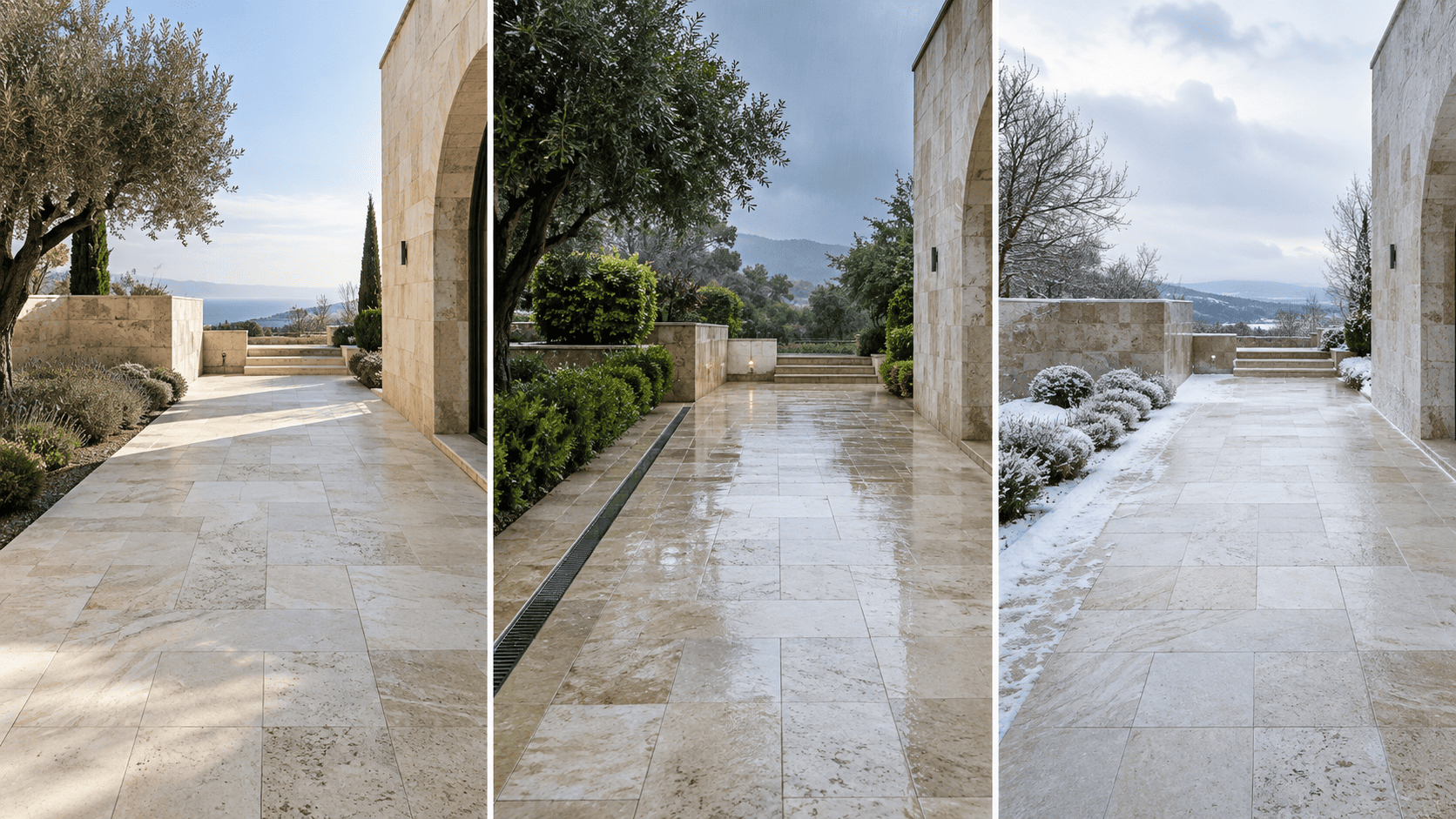
Freeze-thaw exposure is a critical consideration in cold climates. Water absorbed by the stone or installation assembly can freeze, expand and create stress. Repeated cycles may contribute to cracking, flaking, joint failure or surface deterioration.
Neither marble nor travertine should be approved for a freeze-thaw environment based only on its general material category.
The review should include:
Project climate
Stone absorption
Stone density
Relevant laboratory test data
Thickness
Bedding system
Drainage
Joint design
Edge exposure
Installation experience in similar climates
Filled travertine requires additional attention because the stone and filling material may respond differently to exterior exposure. The filling system should be approved for the project’s climate and application.
Dense marble varieties may perform well in suitable exterior systems, but this should be confirmed for the specific material.
Climate-Based Selection Table
The following table provides general guidance. It does not replace project testing or professional specification.
| Climate or Exposure | Marble Considerations | Travertine Considerations | Priority |
|---|---|---|---|
| Hot and Dry | Light colors and textured finishes may improve comfort | Light, tumbled travertine is commonly considered | Heat, dust and surface temperature |
| Hot and Humid | Moisture, algae and cleaning should be planned | Open pores and filling require maintenance planning | Drainage and cleaning |
| Mild Coastal | Salt, wind and constant moisture should be assessed | Salt exposure and open voids require review | Salt resistance and maintenance |
| Heavy Rainfall | Joints, drainage and surface texture are important | Water should not remain in natural voids or joints | Slope and water removal |
| Cold With Freeze-Thaw | Specific stone test data is required | Stone and filling system must be verified | Absorption and freeze-thaw testing |
| Covered Exterior | Wider finish options may be possible | Filled or honed products may be evaluated | Exposure level |
| Pool Environment | Texture and chemical exposure must be assessed | Tumbled and textured finishes may be considered | Slip resistance and pool chemistry |
A material that performs well in a covered terrace may not perform the same way on an exposed pool deck in a freezing climate.
Slip Resistance in Outdoor Areas
Slip resistance is particularly important for:
Pool decks
Exterior stairs
Ramps
Building entrances
Garden paths
Terraces
Outdoor showers
Restaurant patios
Polished surfaces are generally not the first choice for exposed wet outdoor floors. Textured, tumbled, brushed or sandblasted finishes may provide additional surface grip.
However, a textured surface is not automatically safe in every condition. Slip performance depends on:
Surface finish
Water
Dirt
Algae
Pool chemicals
Footwear
Barefoot use
Floor slope
Cleaning
Surface wear
The proposed finish should be tested according to the applicable project standard. Local regulations and the intended wet or dry conditions should guide approval.
Drainage remains essential. Even a textured pool deck can become unsafe when water is allowed to collect on the surface.
Marble vs Travertine for Pool Decks
Pool deck natural stone must combine appearance with surface temperature, slip resistance, water exposure and maintenance.
Travertine is frequently selected for pool surrounds because of its light earth tones and tumbled finish options. Marble pavers can also be used when a suitable variety and textured finish are selected.
Marble Pool Deck Considerations
Marble may be suitable when the project requires:
Refined or formal landscape design
Coordinated marble façades and exterior floors
Gray, beige or distinctive veined surfaces
Textured or tumbled pavers
Custom patterns
Matching steps and coping
Light-colored marble generally absorbs less visible heat than very dark stone, although actual surface temperature depends on color, density, sunlight and environmental conditions.
The Diana Royal Textured Marble Paver is produced in a 3 cm format with a textured finish for applications that include outdoor floors.
Travertine Pool Deck Considerations
Travertine may be suitable when the project requires:
Ivory, cream or beige tones
A warm Mediterranean appearance
Tumbled edges
Visible natural texture
Versailles patterns
Coordination with garden paths and terraces
Open pores can influence cleaning and maintenance. Filled products should be checked for suitability around water and pool chemicals.
Review the Ivory Tumbled Travertine Pavers available within the Tureks paver collection.
Marble vs Travertine for Terraces and Patios
Both marble and travertine can be used on terraces and patios.
Marble may support contemporary, formal and high-end residential or hospitality designs. Travertine can create a warmer relationship between the building, garden and outdoor furniture.
Terrace selection should consider:
Covered or uncovered location
Rainfall
Drainage
Furniture movement
Food and beverage exposure
Barbecue or outdoor kitchen use
Direct sunlight
Freeze-thaw conditions
Cleaning frequency
Interior-to-exterior transitions
Outdoor dining areas may be exposed to wine, lemon, sauces and oils. Marble and travertine are calcium-based stones and can react to acidic substances. Spills should be removed promptly using products suitable for natural stone.
Marble vs Travertine for Walkways
Garden paths and pedestrian walkways require stable installation, suitable thickness and a surface that supports safe movement.
Travertine pavers can integrate naturally with gardens and traditional landscapes. Textured marble pavers can create more structured or contemporary paths.
For walkways, evaluate:
Pedestrian traffic
Wheelchair and pushchair access
Surface evenness
Joint width
Drainage
Tree roots
Ground movement
Edge restraint
Maintenance
Required slip resistance
Tumbled edges can create a softer visual character but may produce a more irregular joint. Accessibility requirements should be considered when selecting the format and edge treatment.
Marble vs Travertine for Exterior Steps
Exterior steps require particular attention because a small amount of water, ice or surface contamination can increase the risk of slipping.
Both stones may be used when the correct material, thickness and finish are selected.
Important details include:
Tread depth
Riser height
Nosing profile
Surface texture
Drainage slope
Edge strength
Joint location
Lighting
Visual contrast
Freeze-thaw exposure
The step nosing can include grooves or other project-approved slip-reducing details. The effect of grooves should be evaluated together with cleaning and edge durability.
Marble vs Travertine for Façades
Marble and travertine are both used for exterior wall and façade applications.
Marble may provide stronger veining and a more formal architectural expression. Travertine can produce linear movement, warm color and a more textured surface.
Façade selection should consider:
Building height
Panel dimensions
Stone thickness
Wind load
Anchoring system
Vein direction
Water management
Climate
Corner details
Replacement access
Vein-cut travertine can create horizontal or vertical bands depending on the cutting and installation direction. Marble slabs may be arranged to coordinate veins across façade panels.
The mechanical fixing and installation system should be designed by qualified project professionals. Adhesive-only installation may not be suitable for high façades or large stone panels.
Explore marble slabs and travertine products for façade and exterior wall applications.
How Surface Finish Affects Outdoor Performance
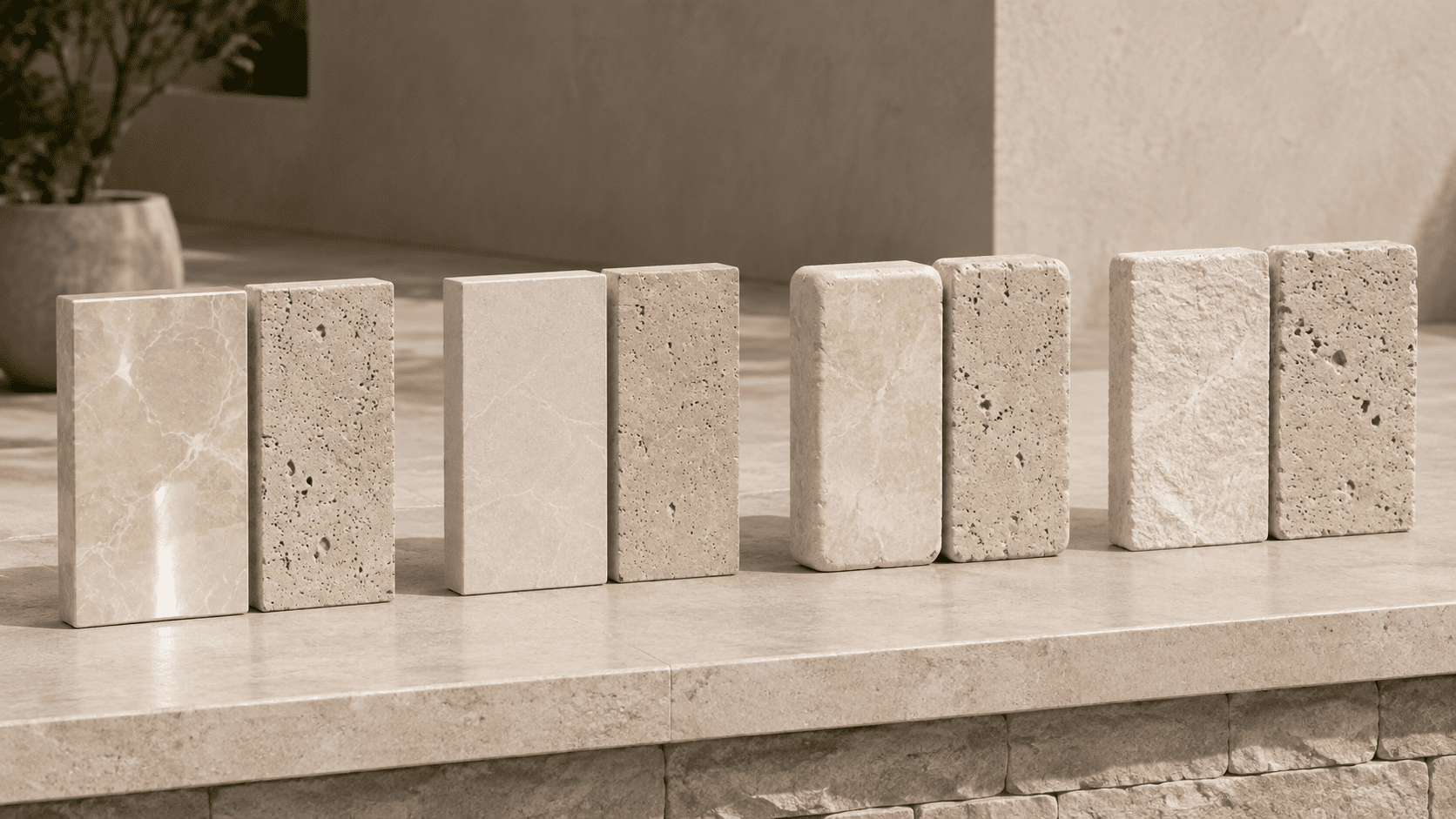
The finish changes the stone’s appearance, texture, cleaning requirements and slip behavior.
Polished Finish
Polishing creates a reflective surface and increases the visibility of color and veining. It is generally more suitable for protected walls and selected vertical exterior applications than exposed wet floors.
Honed Finish
Honing produces a smooth, low-sheen surface. It may be used in covered exterior areas when the proposed finish meets the project requirements.
Honed stone should not automatically be described as slip-resistant. Testing is still required.
Tumbled Finish
Tumbled stone has softened edges and a weathered surface. This finish is common in travertine and selected marble pavers. It can support pool decks, patios and traditional landscape designs.
Brushed Finish
Brushing creates a lightly textured surface while retaining much of the stone’s natural movement. It may be considered for terraces, paths and exterior walls.
Sandblasted Finish
Sandblasting creates a more granular surface texture. It can be evaluated for exposed floors, steps and entrances where additional surface grip is required.
Textured Finish
Mechanical texturing can create a pronounced surface suitable for exterior pavers and architectural applications. The texture should still be evaluated for cleaning, barefoot comfort and slip resistance.
Filled or Unfilled Travertine Outdoors
Travertine can be supplied with its natural pores open or filled.
Filled Travertine
Filled travertine provides a smoother and more uniform surface. The filling material should be suitable for outdoor exposure, temperature changes, water and cleaning chemicals.
Filled areas should be monitored because the filling and natural stone may weather differently.
Unfilled Travertine
Unfilled travertine retains visible natural voids. This creates a more rustic surface but may allow dirt, organic material and water to collect in the pores.
Open voids can require more detailed cleaning, particularly near vegetation and pools.
The decision should be based on appearance, climate, maintenance capacity and installation.
Outdoor Stone Thickness
Outdoor natural stone is often supplied in thicker formats than standard interior tile. Pavers may be available in 3 cm or greater thicknesses depending on the material and product.
For example:
Diana Royal Textured Marble Paver is available in 3 cm thickness.
Diana Royal Tumbled Marble Paver is available in a 3.5 cm Versailles Pattern format.
Skyline Vein Cut Textured Marble Paver is available in a 3 cm Versailles Pattern format.
The correct thickness depends on the substrate, installation system, loading, piece size and application. Product thickness should be specified by the project team rather than selected by appearance alone.
Installation and Drainage Requirements
Even a suitable stone can fail when the installation system does not match the environment.
Outdoor installation planning should include:
Stable substrate
Correct slope
Drainage
Suitable mortar or fixing system
Movement joints
Perimeter joints
Correct grout
Back coverage
Edge restraint
Moisture management
Climate during installation
Curing time
Water should not remain beneath or on top of the stone. Poor drainage can contribute to staining, salt deposits, joint deterioration and freeze-thaw damage.
Large-format slabs, pavers and façade panels require application-specific engineering and installation.
Cleaning and Maintenance
Outdoor marble and travertine are exposed to dust, soil, leaves, food, drinks and biological growth.
Routine maintenance may include:
Removing loose dirt and leaves
Cleaning with pH-neutral products
Rinsing away cleaning residue
Removing spills promptly
Keeping drains and joints clear
Inspecting filled areas
Checking sealers where used
Repairing damaged joints
Avoiding acidic cleaners
Avoiding aggressive pressure washing
High-pressure cleaning can damage joints, filling material and softer stone surfaces when performed incorrectly.
The maintenance plan should be agreed upon before installation, especially for hotels, resorts and commercial outdoor spaces.
Marble vs Travertine Selection Summary
Choose marble when the project requires:
More pronounced veining
Formal or contemporary architecture
Coordinated exterior floors and façades
Gray, white, beige or multicolor options
Textured and tumbled pavers
Custom slab and paver formats
Choose travertine when the project requires:
Warm ivory, beige or walnut tones
A relaxed landscape character
Tumbled or brushed surfaces
Pool, terrace and courtyard applications
Filled or unfilled options
Versailles and modular paver patterns
The material name alone does not determine performance. Technical properties, finish, climate, installation and maintenance should guide the final decision.
Outdoor Natural Stone Selection Checklist
Before approving marble or travertine, confirm:
The application area has been identified
The local climate has been reviewed
Freeze-thaw exposure has been assessed
Water absorption data has been reviewed
The finish is suitable for wet or dry use
Slip resistance requirements have been verified
Stone thickness has been approved
Drainage and slope have been designed
The installation system has been specified
Filled travertine is suitable for exterior exposure
Range samples have been approved
A site mock-up has been prepared where required
Waste and replacement stock have been calculated
A maintenance programme has been defined
Frequently Asked Questions
Let's choose the right natural stone for your project.
We support your project with large-format slabs, custom cutting, and expert guidance.
Related Articles