How to Choose Natural Stone for Hotel Projects
Choosing natural stone for hotels requires more than selecting an attractive color or pattern. Hotel surfaces must support continuous guest traffic, frequent cleaning, luggage movement, moisture exposure and the visual standards of the property.
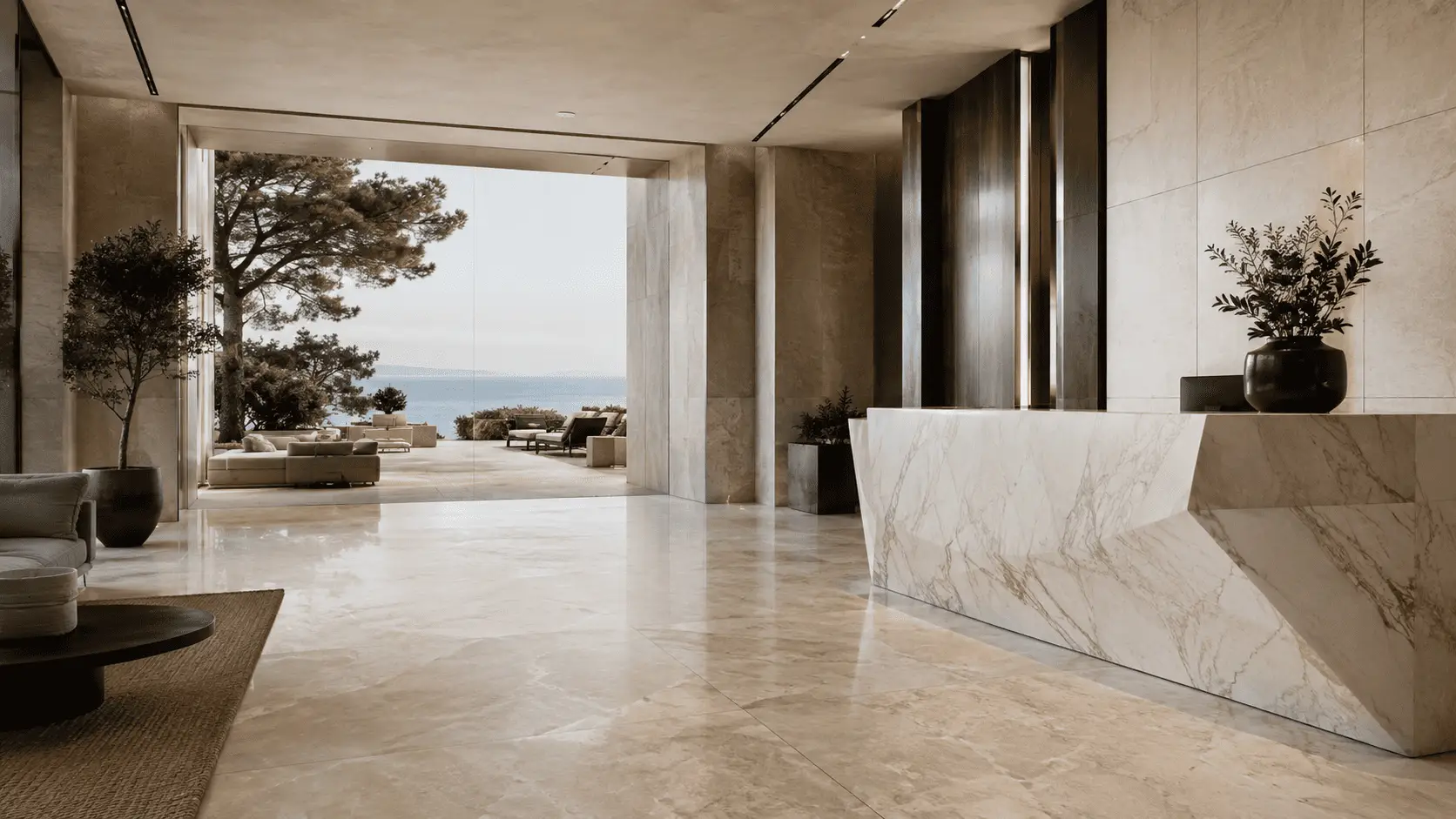
Table of Contents
- Why Use Natural Stone in Hotel Projects?
- Start With the Operational Requirements
- Natural Stone for Hotel Lobbies
- Recommended Lobby Selection Criteria
- Natural Stone for Hotel Corridors
- Natural Stone for Hotel Bathrooms
- Natural Stone for Spa and Wellness Areas
- Natural Stone for Restaurants and Bars
- Natural Stone for Hotel Exterior Areas
- Natural Stone for Pool Surrounds
- Choosing Between Marble, Travertine and Limestone
- When to Choose Marble
- When to Choose Travertine
- When to Choose Limestone
- Selecting the Right Surface Finish
- Polished Finish
- Honed Finish
- Brushed Finish
- Tumbled Finish
- Sandblasted or Textured Finish
- Slip Resistance in Hotel Projects
- Maintenance Requirements for Hotel Natural Stone
- Planning Color and Vein Continuity
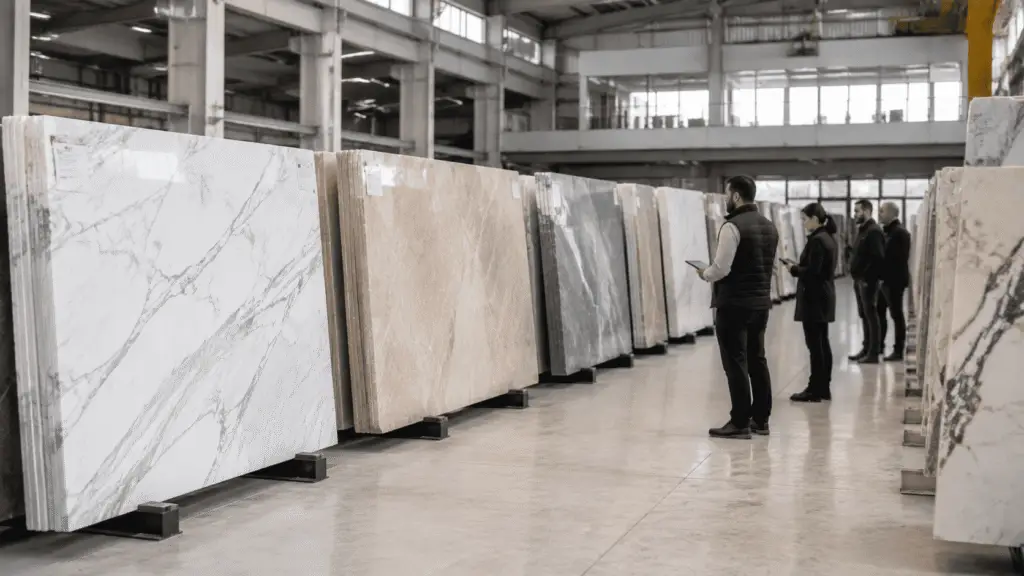
- Why Small Samples Are Not Enough
- Production Planning for Large Hotel Projects
- Calculating Quantity and Replacement Stock
- Coordinating Stone Across Different Hotel Areas
- Working With a Hospitality Stone Supplier
- Hotel Natural Stone Selection Checklist
- Frequently Asked Questions
- Plan Your Hotel Natural Stone Project With Tureks
Need help choosing the right stone?
Let our expert team help you choose the ideal natural stone for your project.
Choosing natural stone for hotels requires more than selecting an attractive color or pattern. Hotel surfaces must support continuous guest traffic, frequent cleaning, luggage movement, moisture exposure and the visual standards of the property.
A stone that performs well on a lobby feature wall may not be suitable for a bathroom floor or an exposed pool deck. Material type, finish, thickness, slip resistance, maintenance requirements and supply continuity should therefore be evaluated for each area of the hotel.
Marble, travertine and limestone can all be used in hospitality interiors and exterior applications. The correct choice depends on the intended location, traffic level, climate, design concept and maintenance plan.
This guide explains how architects, interior designers, contractors and purchasing teams can select natural stone for hotel lobbies, corridors, bathrooms, guest rooms and outdoor areas.
Why Use Natural Stone in Hotel Projects?
Natural stone gives hospitality spaces a material character that cannot be completely repeated with manufactured surfaces. Each marble, travertine or limestone piece may display its own tonal transitions, mineral details and veining.
These natural variations can help hotels create interiors that feel specific to the property rather than based on a standard material catalogue.
Natural stone can be used in:
Lobby flooring
Reception desks
Feature walls
Hotel corridors
Elevator halls
Guest bathrooms
Spa and wellness areas
Restaurants and bars
Staircases
Exterior façades
Terraces
Courtyards
Pool surrounds
Landscape paths
The material still needs to be selected according to the technical demands of each space. Appearance should be considered alongside surface finish, traffic, cleaning, moisture and replacement planning.
Designers looking for hospitality applications can review the Hilton Hotel Project, where Diana Royal Marble was selected for the project.
Start With the Operational Requirements
The selection process should begin with an analysis of how each hotel area will be used.
A hotel lobby and a guest bathroom have different performance requirements. The lobby receives luggage wheels, trolleys and continuous foot traffic. A bathroom is exposed to water, cosmetic products and frequent cleaning. An outdoor terrace may be affected by rain, sunlight, temperature changes and freeze-thaw conditions.
The project team should define the following before selecting a stone:
Interior or exterior application
Floor or wall installation
Expected traffic level
Wet or dry conditions
Cleaning frequency
Cleaning products used by the hotel
Slip resistance requirements
Climate and weather exposure
Required tile or slab size
Desired finish
Replacement stock requirements
Project schedule
Total material quantity
This information helps the hospitality stone supplier recommend suitable materials and identify where additional testing may be required.
Natural Stone for Hotel Lobbies
The lobby establishes the first physical impression of the hotel. Stone selected for this area should support the design identity while withstanding heavy and continuous use.
Hotel lobby floors may be exposed to:
Guest foot traffic
Suitcases and luggage carts
Cleaning machines
Furniture movement
Soil and moisture carried from outside
Temporary event equipment
Reception queues
Marble is commonly selected for hotel lobby flooring because of its natural veining and ability to create expansive, coordinated surfaces. Light beige, white and gray stones can make the lobby feel brighter, while darker marble may be used for borders, reception desks and architectural accents.
A polished finish can produce a reflective appearance, but the suitability of that finish should be assessed according to entrance conditions and local slip resistance requirements. Honed, brushed or textured finishes may be considered where additional surface grip is needed.
Entrance mats and transitional flooring zones can reduce the amount of moisture and abrasive dirt carried onto the stone.
Tureks hotel references include the Costa d’Este Beach Resort, where beige-toned travertine and marble were used in the hotel’s interior spaces and floors.
Recommended Lobby Selection Criteria
When choosing hotel marble flooring for a lobby, assess:
Abrasion and traffic conditions
Finish and slip resistance
Tile or slab thickness
Module size
Vein direction
Expected shade variation
Maintenance programme
Availability of replacement material
Compatibility with floor cleaning equipment
For large lobby areas, full-size control samples or dry-laid sample panels are more informative than a single small sample.
Explore marble tile collections for lobby floors and coordinated interior surfaces.
Natural Stone for Hotel Corridors
Hotel corridors experience repeated movement from guests, housekeeping carts, maintenance equipment and luggage. The material should provide visual continuity while remaining practical to maintain.
Large-format marble or limestone tiles can reduce the number of visible joints and create a calm, continuous floor. Smaller modular tiles can make replacement easier and may provide more flexibility in narrow or irregular corridors.
The stone selection should account for:
Housekeeping cart traffic
Luggage wheels
Carpet-to-stone transitions
Elevator thresholds
Door clearances
Acoustic requirements
Skirting and wall protection
Emergency route requirements
Cleaning equipment
A heavily polished surface may show scratches and wear patterns more visibly in high-traffic corridors. A honed finish can create a softer appearance, although every finish must still be reviewed against the required performance criteria.
Stone tiles should be distributed from several crates during installation. This helps blend the natural shade and veining variations across the corridor rather than concentrating similar pieces in one area.
Natural Stone for Hotel Bathrooms
Hotel bathrooms combine design expectations with moisture, cleaning and safety requirements. Natural stone may be used on floors, shower walls, vanity tops, bathtub surrounds and feature walls.
Marble is frequently selected for bathrooms because it can coordinate floors, walls, mosaics and vanity surfaces within one material palette. Travertine can create a warmer and more textured atmosphere. Limestone can support understated and contemporary bathroom designs.
Bathroom stone selection should consider:
Wet floor slip resistance
Shower floor drainage
Water absorption characteristics
Sealing requirements
Compatibility with cleaning chemicals
Grout joint layout
Soap and cosmetic exposure
Replacement access
Maintenance frequency
Shower floors usually require smaller pieces or mosaics to follow the drainage slope. Additional joints can also provide more surface grip than large polished tiles.
Natural stone is not a substitute for waterproofing. Shower walls and floors need a correctly designed waterproofing system behind the finish material.
Tureks marble mosaics and collections can be reviewed for hotel shower floors, bathroom walls and decorative details. Coordinated natural stone sinks are available in the Sinks and Tubs Collection.
Natural Stone for Spa and Wellness Areas
Spa, hammam, sauna and wellness areas are exposed to moisture, temperature changes, oils, cosmetics and frequent cleaning. The stone and finish must be selected specifically for these conditions.
Travertine and limestone can create a calm, natural atmosphere. Marble may be used for walls, benches, vanity areas and selected floor surfaces.
The project team should evaluate:
Barefoot slip resistance
Continuous moisture exposure
Drainage
Surface temperature
Cleaning chemicals
Massage oils and cosmetic products
Joint and sealant performance
Required maintenance access
A polished surface should not be selected for a wet spa floor based only on its appearance. Test data, local building requirements and the complete floor assembly should guide the final decision.
For baths, saunas and walking areas, review the travertine tile collection.
Natural Stone for Restaurants and Bars
Hotel restaurants and bars combine heavy traffic with food, beverages, grease and frequent cleaning. Stone may be used on floors, bar fronts, counters, walls and decorative panels.
When natural stone is used near food and beverage service, the project team should consider:
Wine and citrus exposure
Coffee and oil stains
Cleaning frequency
Chair movement
Bar trolley traffic
Countertop hygiene requirements
Edge details
Sealing and maintenance
Calcium-based stones such as marble, travertine and limestone can react to acidic substances. Lemon juice, wine, vinegar and some cleaning chemicals may etch the surface. This does not necessarily prevent their use, but it requires an appropriate finish and an informed maintenance plan.
Feature walls, bar fronts and reception-style counters experience less direct abrasion than floors and can support more expressive veining or decorative stonework.
Tureks provides custom-made natural stone designs for project-specific patterns, waterjet applications and architectural details.
Natural Stone for Hotel Exterior Areas
Hotel exterior areas may include entrances, terraces, courtyards, pool decks, façades, garden paths and outdoor dining spaces.
Exterior stone must be evaluated according to:
Climate
Rain exposure
Freeze-thaw conditions
Direct sunlight
Salt or coastal exposure
Drainage
Slip resistance
Installation system
Stone thickness
Surface finish
Maintenance access
Travertine is frequently considered for terraces, courtyards and pool areas because of its warm tones and textured finish options. Limestone can be used for façades, covered terraces and landscape applications when the selected variety is suitable for local conditions. Certain marble varieties can also be used outside when their technical characteristics and finish meet project requirements.
A stone should not be specified for exterior use only because it has been used outdoors in another country. Climate, installation method and stone performance can differ considerably between locations.
Explore the Tureks travertine collection and limestone collection for exterior and hospitality applications.
Natural Stone for Pool Surrounds
Pool areas require careful coordination between material selection, surface finish, drainage and installation.
A pool surround may be exposed to:
Constant water
Barefoot traffic
Pool treatment chemicals
Sunlight
Heat
Outdoor furniture
Food and beverages
Frequent cleaning
Textured, brushed, tumbled or other suitable non-polished finishes may be considered for pool decks. The final finish should be assessed using relevant slip resistance testing and local regulations.
The pool coping, surrounding floor and drainage system should be designed together. Standing water can create safety and maintenance problems even when a textured stone is used.
The Regnum The Crown Hotel demonstrates the use of Palladian Marble Mosaic in a beachside hospitality setting.
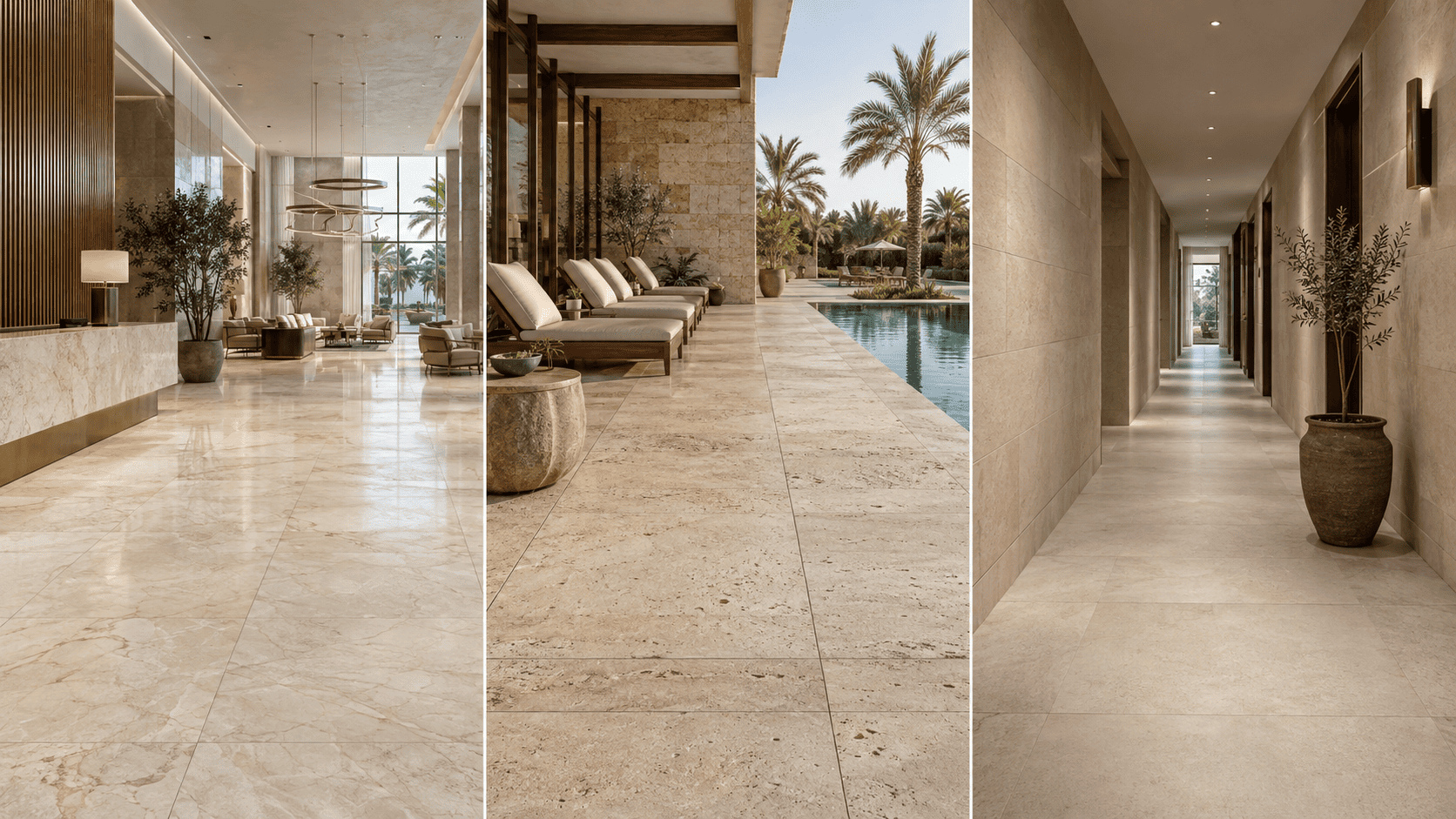
Choosing Between Marble, Travertine and Limestone
Marble, travertine and limestone each have a distinct visual and material character. No single material is suitable for every hotel surface.
| Selection Factor | Marble | Travertine | Limestone |
|---|---|---|---|
| Visual Character | Crystalline with natural veining | Porous with warm tonal movement | Soft and generally understated |
| Common Hotel Uses | Lobbies, bathrooms, reception areas and feature walls | Terraces, spas, pool areas and warm interior floors | Façades, corridors, walls and calm interior schemes |
| Typical Finish Options | Polished, honed, brushed and textured | Honed, filled, unfilled, tumbled and brushed | Honed, brushed, sandblasted and textured |
| Surface Variation | Veining and shade movement | Voids, bands and tonal movement | Fossils, tonal variation and subtle movement |
| Maintenance | Requires suitable cleaning and periodic assessment | Filled areas and natural voids require attention | Finish and stone density influence maintenance |
| Wet Area Selection | Finish and slip resistance must be verified | Textured finishes may be considered | Technical suitability must be confirmed |
| Exterior Selection | Depends on stone variety and climate | Commonly evaluated for outdoor use | Depends on variety, climate and finish |
These are general comparisons. Each stone variety should be assessed using its own technical data and project conditions.
When to Choose Marble
Marble may be suitable when the project requires:
Distinctive natural veining
Formal or high-end interior character
Coordinated slabs, tiles and mosaics
Reception desks and feature walls
Large lobby floors
Bathroom surfaces
Custom waterjet patterns
Bookmatched slab installations
For project-specific colors and formats, review the Tureks marble collections and marble slabs.
When to Choose Travertine
Travertine may be considered when the design requires:
Warm cream, beige or walnut tones
A natural or relaxed hospitality character
Tumbled or textured surfaces
Courtyards and terraces
Pool surrounds
Spa areas
Indoor and outdoor visual continuity
Filled or unfilled surface options
Filled travertine creates a more uniform surface. Unfilled travertine retains visible natural voids and a more rustic character. The appropriate option depends on traffic, cleaning and exposure.
Review available materials on the Tureks travertine page.
When to Choose Limestone
Limestone may be suitable when the hotel design calls for:
Calm and consistent natural tones
Minimal or contemporary interiors
Exterior cladding
Wall applications
Corridors and public areas
Subtle fossil or mineral details
Coordinated interior and exterior palettes
Different limestone varieties may have different densities and technical properties. Suitability should be confirmed for the intended application.
Explore Tureks limestone products and Casablanca Limestone for slabs, tiles and vanity applications.
Selecting the Right Surface Finish
The finish changes the appearance, texture, maintenance and slip characteristics of natural stone.
Polished Finish
A polished surface reflects light and makes color and veining more prominent. It may be used for hotel lobby walls, reception counters, vanity tops and selected dry interior floors.
Its suitability for entrances, wet floors and high-traffic areas should be assessed carefully.
Products Related to This Article


Honed Finish
A honed finish has a smooth, matte or low-sheen appearance. It may show minor wear differently from a highly polished surface and can support contemporary hotel interiors.
A honed surface is not automatically slip-resistant. Test results and project conditions are still required.
Brushed Finish
A brushed finish creates a lightly textured surface. It can support indoor and outdoor designs where a more tactile appearance is desired.
Tumbled Finish
Tumbled stone has softened edges and an aged surface character. It is commonly associated with travertine and limestone applications, including courtyards, pool areas and traditional hospitality designs.
Sandblasted or Textured Finish
A sandblasted or mechanically textured finish can provide additional surface texture. It may be considered for entrances, exterior floors and wet areas when supported by appropriate testing.
The final finish should be approved using a representative sample rather than selected from photographs alone.
Slip Resistance in Hotel Projects
Slip resistance is particularly important in:
Main entrances
Bathrooms
Shower floors
Spa areas
Pool surrounds
Exterior terraces
Restaurant entrances
Service areas
No natural stone should be described as universally slip-proof. Performance depends on the stone, finish, contamination, slope, cleaning method and footwear or barefoot conditions.
The specification process should include:
Applicable local standards
Required test method
Test results for the proposed finish
Wet and dry conditions
Cleaning procedures
Drainage design
Transition details
Entrance matting
Installation quality
The architect, consultant and contractor should verify that the complete floor system meets the project’s safety requirements.
Maintenance Requirements for Hotel Natural Stone
Maintenance should be planned before the stone is approved. Hotel housekeeping teams need clear instructions for routine cleaning, stain response and periodic care.
A natural stone maintenance plan may include:
Daily dust and grit removal
Cleaning with pH-neutral products
Immediate removal of spills
Avoidance of acidic and abrasive cleaners
Periodic inspection of sealers
Grout and joint maintenance
Repair procedures for chips or cracks
Replacement stock management
Scheduled professional cleaning
Marble, travertine and limestone are calcium-based materials that may be affected by acidic chemicals. Housekeeping products should therefore be reviewed for natural stone compatibility.
A surface that requires an unrealistic maintenance routine is unlikely to perform well in a busy hotel, even if it looks suitable during the sample approval stage.
Planning Color and Vein Continuity
Natural stone does not have the exact repetition found in manufactured materials. This variation is part of its character, but it needs to be managed across large hospitality projects.
Color and vein continuity may be affected by:
Quarry layer
Block selection
Production batch
Cutting direction
Slab sequence
Tile size
Finish
Lighting
Installation layout
Large hotel projects should establish an acceptable range rather than approve only one unusually uniform sample.
The review process may include:
Initial reference sample
Range samples showing light and dark variation
Full-size slab photographs
Dry-laid tile panels
Mock-up approval
Production lot review
Installation blending instructions
Where strong veining is used, slabs may need to be numbered and planned according to the intended sequence. Bookmatched walls and reception features require additional coordination during block cutting and fabrication.
Why Small Samples Are Not Enough
A small stone sample can show the base color and finish, but it may not represent the complete range of veins, fossils, voids or tonal variation.
For significant hotel areas, request:
Multiple samples from the proposed range
Samples from current production
Full-size slab images
Dry-laid panels
Finish samples
Edge detail samples
Mock-ups under project lighting
Samples should be reviewed under lighting conditions similar to the final hotel environment. Warm artificial lighting, daylight and directional lighting can change how the stone color and finish are perceived.
Production Planning for Large Hotel Projects
Natural stone production should be coordinated with the construction schedule. Waiting until the installation stage to confirm material availability may create batch, color and delivery problems.
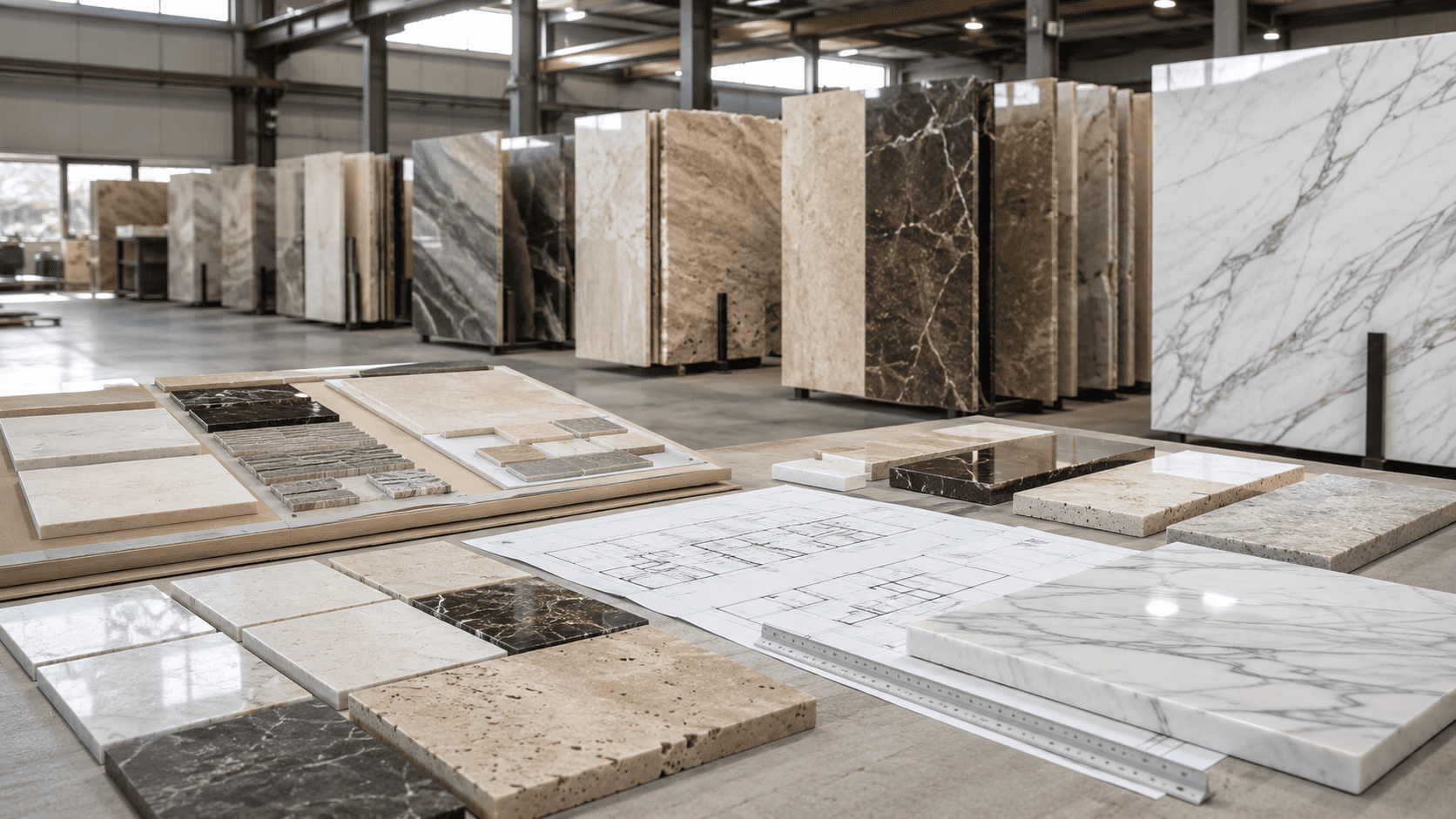
Production planning should cover:
Final quantity
Waste allowance
Approved stone range
Tile and slab dimensions
Thickness
Finish
Edge treatment
Vein direction
Cut lists
Packaging
Area-based crate labelling
Shipping sequence
Replacement stock
Installation schedule
Materials can be packaged and labelled by hotel area, floor, room type or installation phase. This can make site handling more efficient and reduce the risk of installing the wrong material in a particular area.
Tureks provides project-specific production capabilities through its custom-made designs and natural stone services.
Calculating Quantity and Replacement Stock
The project quantity should include more than the exact net installation area.
Additional material may be required for:
Cutting waste
Vein matching
Pattern alignment
Breakage
Future repairs
Room mock-ups
Attic stock
Complex corners
Custom pieces
The waste allowance depends on tile size, pattern, room geometry, stone variation and fabrication requirements. Bookmatched walls and directional stones may require a higher allowance than a simple modular floor.
Replacement material should be ordered with the main production lot whenever possible. A future production run may come from a different quarry section and display a different shade or vein structure.
Coordinating Stone Across Different Hotel Areas
Using one material everywhere is not always the most effective strategy. A coordinated natural stone palette can provide visual continuity while matching each area’s technical needs.
For example:
Polished marble on a lobby feature wall
Honed marble on a lobby floor
Marble mosaics on bathroom and shower floors
Limestone on corridor walls
Travertine on terraces and pool surrounds
Textured stone at entrances
Slabs on reception and bar fronts
The materials can share related colors without using the same finish or format in every area. This approach supports a consistent hotel identity while responding to traffic, moisture and maintenance requirements.
Working With a Hospitality Stone Supplier
A hospitality stone supplier should support more than product selection. Large projects require coordination between design intent, stone availability, fabrication and delivery.
Before confirming a supplier, evaluate:
Quarry and production access
Current block availability
Sample process
Technical documentation
Finish options
Custom fabrication capability
Quality control
Production capacity
Packing standards
Export experience
Delivery planning
Replacement material policy
Project references
Tureks manufactures marble, travertine and limestone products for architectural projects. The company’s hospitality references include the Hilton Hotel Project, Costa d’Este Beach Resort and Exclusive Hotel Residence Project.
Hotel Natural Stone Selection Checklist
Before approving natural stone for a hotel project, confirm:
Each application area has been identified
Traffic and moisture conditions have been assessed
Interior and exterior materials have been separated
The stone variety is suitable for the intended use
The surface finish has been approved
Slip resistance requirements have been verified
Maintenance products have been reviewed
Range samples have been approved
Vein direction has been defined
A mock-up has been completed where required
Final quantities include waste allowance
Replacement stock has been planned
Production capacity has been confirmed
Crate labelling has been coordinated
The shipping schedule matches the installation programme
Frequently Asked Questions
Let's choose the right natural stone for your project.
We support your project with large-format slabs, custom cutting, and expert guidance.
Related Articles