Quartzite vs Marble: Comparing Granite, Durability, and Maintenance for Your Home
Comparing Granite, Durability, and Maintenance for Your Home
Choosing the perfect surface for your home often comes down to a classic debate: quartzite vs marble. Both are stunning metamorphic rocks that offer unparalleled luxury, but they behave very differently under the pressure of daily use. This article provides an in-depth comparison of durability, aesthetic tone, and long-term maintenance to help you decide which natural stone will best elevate your space. Whether you are remodeling a kitchen or designing a bathroom, understanding these key differences is essential for a lasting investment in your property.
1. What is the fundamental difference in composition between marble and quartzite?
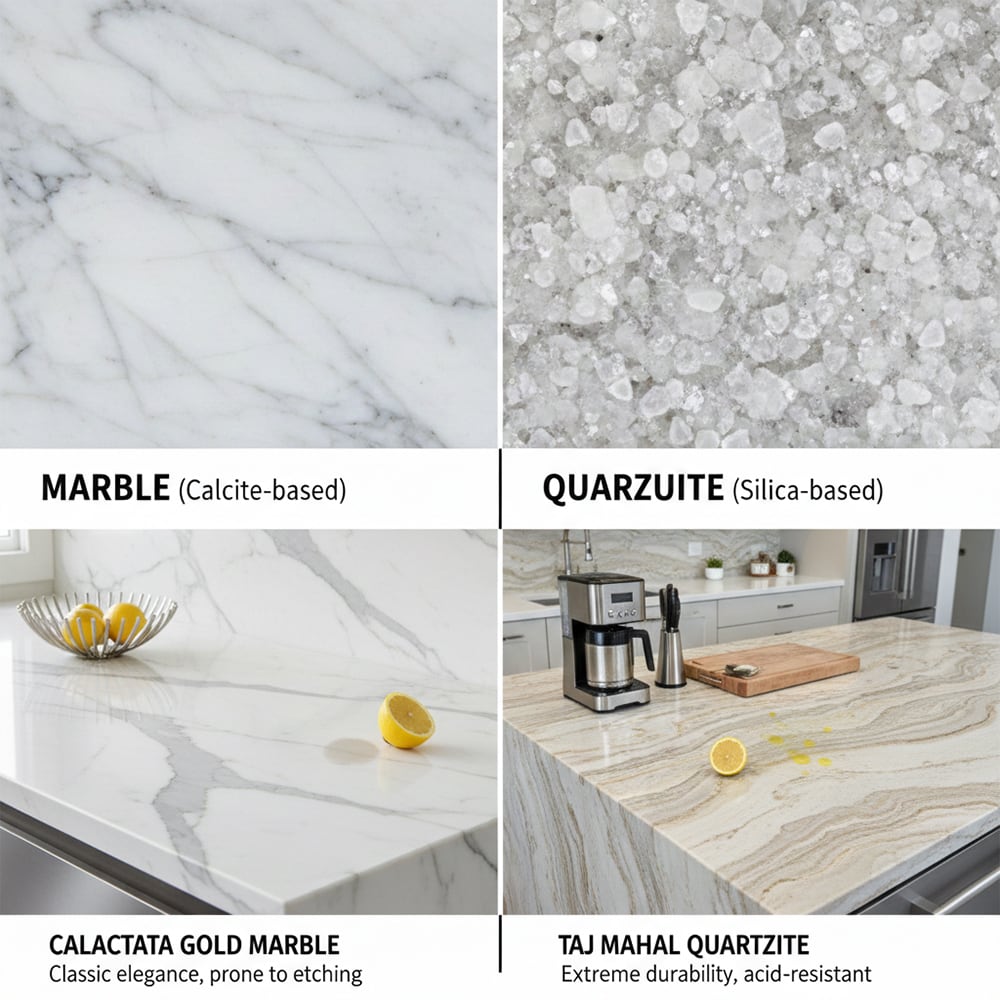
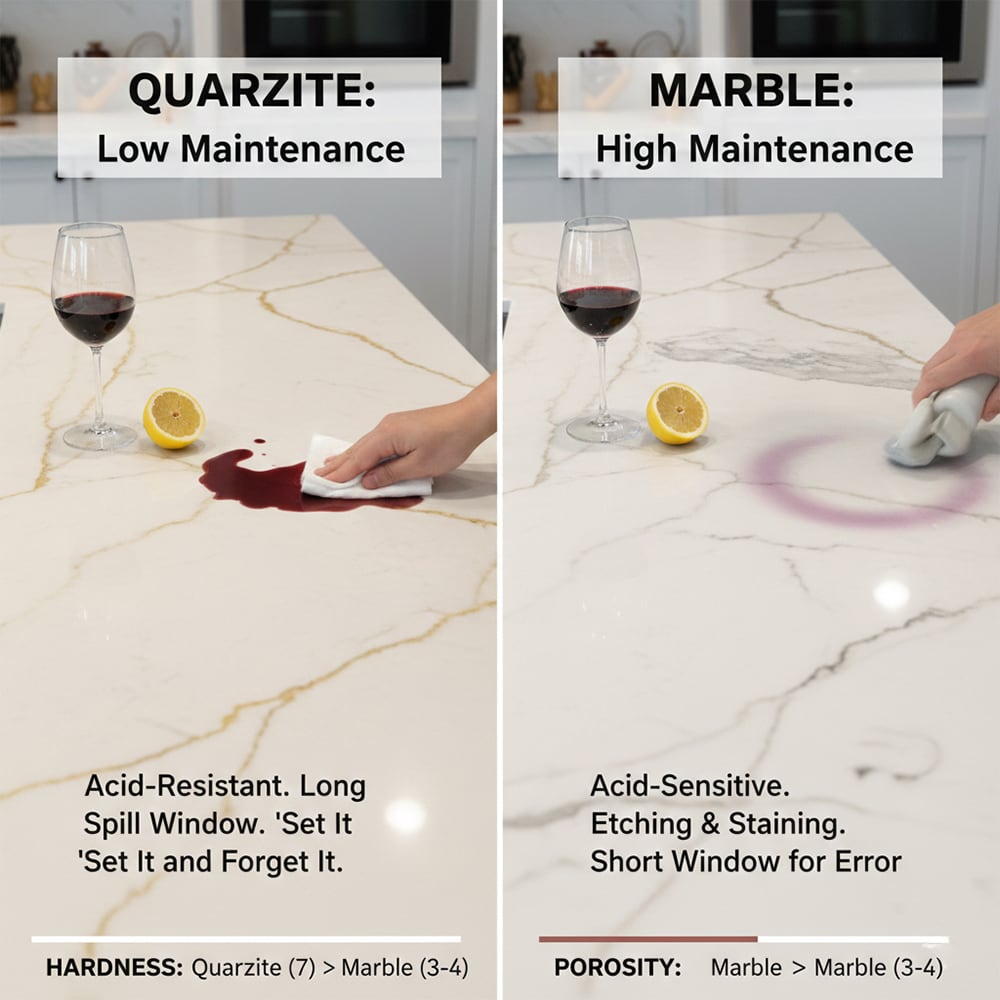
To understand how these stones perform in a domestic environment, we must look at their geological origins. Marble is primarily composed of calcite. This mineral forms when limestone is subjected to intense heat and pressure over millions of years. This organic composition is what gives the stone its signature flowing veining and soft, luminous glow. Because it is calcium-based, marble is naturally softer and chemically reactive to acids. This reactivity makes it prone to etching and staining if not handled with care.
In contrast, quartzite is a natural stone that originates as sandstone. Through a similar metamorphic process, the quartz grains recrystallize into an incredibly dense and hard structure. While quartzite and marble may look similar to the untrained eye, quartzite is significantly tougher. On the Mohs scale of mineral hardness, quartzite typically ranks around a 7, whereas marble sits around a 3 or 4. This geological distinction is the primary reason why quartzite offers added durability in high traffic areas.
The chemical stability of quartzite is also a major factor. Unlike the calcium carbonate in marble, the silica based structure of quartzite does not react to common household acids like lemon juice or vinegar. When we talk about composition, we are looking at the difference between a stone that is essentially a compressed shell and mineral deposit (marble) and one that is a fused volcanic glass like structure (quartzite). This difference dictates every aspect of how you will live with these materials once they are installed in your home.
2. Quartzite vs marble: Which offers better durability for busy kitchens?
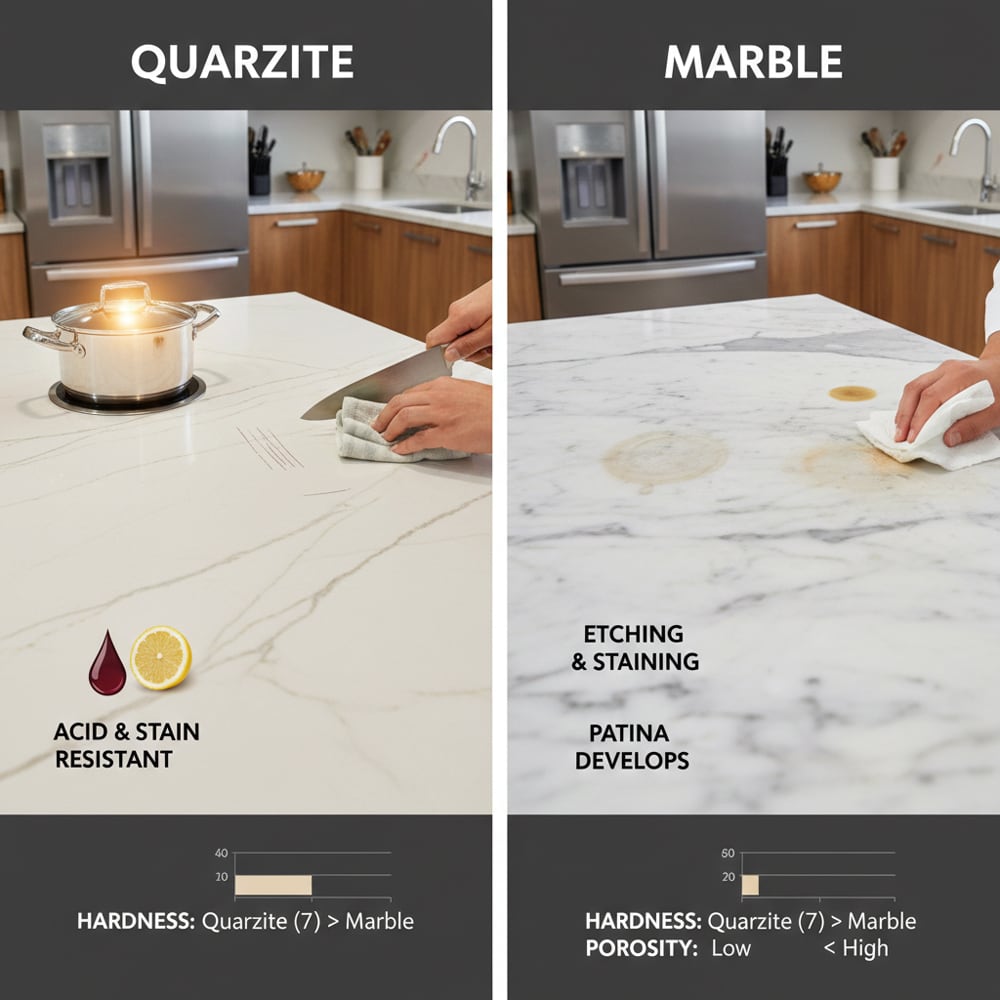
When it comes to busy kitchens, the durability of your countertop material is paramount. Quartzite is often considered the top choice for homeowners who want the look of white stone without the constant worry of damage. It is highly resistant to scratch marks and can withstand high temperatures. This makes it an excellent choice for kitchen islands where meal prep and hot pans are a constant reality. If you prioritize a surface that can handle heavy wear and tear, quartzite may be the winner.
Marble, while famously used in European bakeries, requires a different mindset. It is a more porous and prone material compared to its counterparts. In a kitchen setting, a marble surface will eventually develop a patina over time. Many homeowners find this charming as it reflects the history of the home. However, if you cannot tolerate the sight of a faint ring from a lemon or a wine stain, quartzite is generally better than marble for your specific lifestyle needs.
Durability is not just about hardness; it is also about density. Quartzite is less porous than marble, meaning it absorbs liquids at a much slower rate. In a busy kitchen where spills are inevitable, this window of time allows you to clean up a mess before it becomes a permanent stain. Marble provides a much shorter window for error. Even with a high quality sealer, the physical structure of marble remains more open to infiltration than the tightly packed crystals of quartzite.
3. Why are marble countertops considered the gold standard of timeless beauty?
Despite its vulnerabilities, many designers argue that marble is best for creating an atmosphere of timeless elegance. There is a depth to a marble slab that is difficult to replicate with any other natural stone. The soft, white backgrounds of varieties like Bianco Carrara or the bold, dramatic strokes of Calacatta have been used in architecture for centuries. This timeless beauty is why marble countertops remain a highly sought feature in high end real estate.
The aesthetic versatility of marble allows it to fit into both modern and traditional designs. From sleek bathroom vanities to ornate fireplace surrounds, it brings a sense of luxury that feels both historic and fresh. While it may require more upkeep, the visual impact of a high quality marble surface is often enough to convince homeowners that the extra effort is worth the breathtaking result.
There is also a psychological component to marble. It is cool to the touch and possesses a translucency that reflects light in a way that feels organic and soft. This light refraction is why marble has been the preferred medium for sculptors throughout history. When installed in a home, it creates a sense of calm and luxury that harder, more aggressive looking stones sometimes fail to achieve.
4. How does quartzite vs marble aesthetics compare in a showroom?
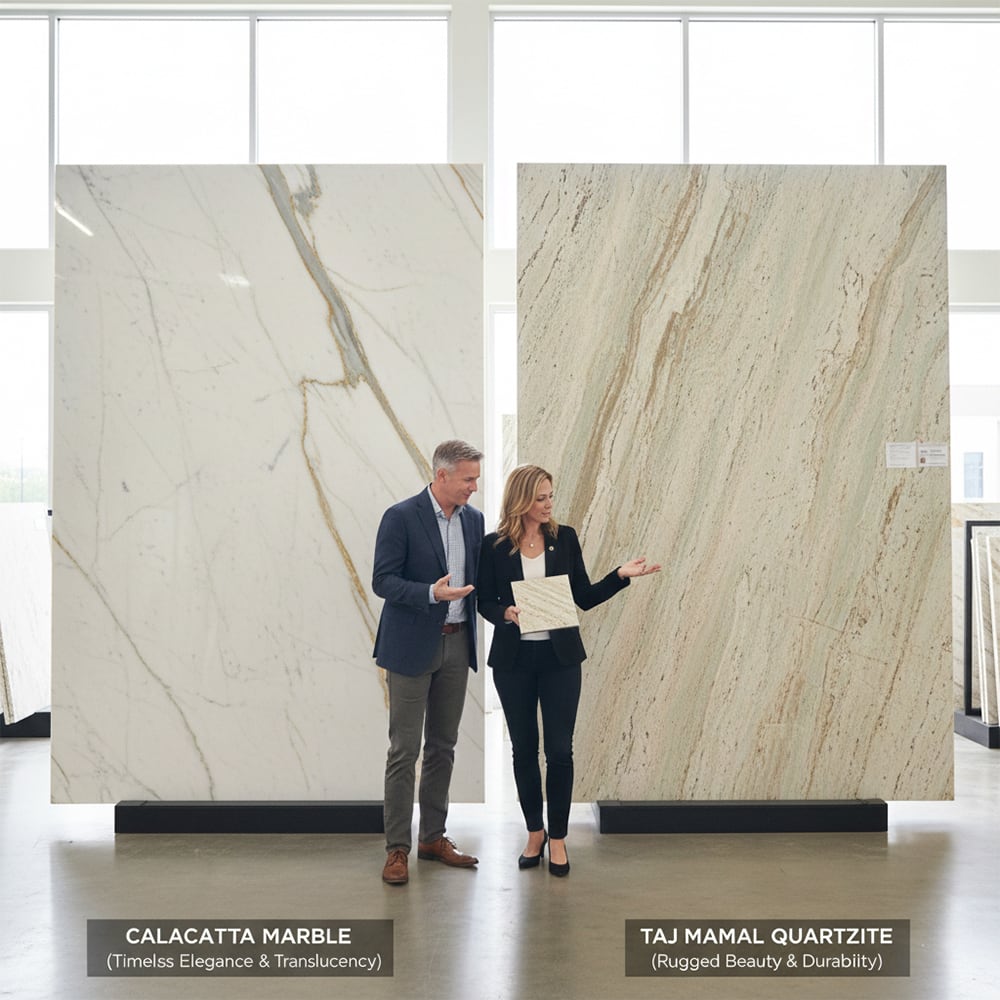
When you walk into a showroom, you will notice a wider range of colors and patterns in both materials. Quartzite often features incredible, linear veining and can come in unique colors like the soft greens and creams of the famous Taj Mahal variety. Because quartzite often mimics the look of marble, it is a popular alternative for those who want the marble look with the strength of granite.
Marble aesthetics are defined by their unique veining and glow. When comparing a slab of Calacatta marble to a similar quartzite, you might notice the marble has a more translucent quality. The choice often comes down to the specific tone of the slab. Some prefer the crisp, cool whites of marble, while others are drawn to the earthy, complex layers found in premium quartzite.
It is important to remember that every slab of natural stone is a unique work of art. In a showroom, you should always view the specific slab that will be installed in your home. Photos and small samples cannot capture the sweeping movement of a full quartzite slab or the delicate web of veins in a marble piece. The variation between two slabs of the same stone can be significant, making the selection process a personal journey of discovery.
5. Is marble vs quartzite maintenance a dealbreaker for most homeowners?
The maintenance requirements for these two stones are perhaps their biggest differentiator. All natural stone surfaces should be sealed to resist moisture, but marble requires more frequent attention. Because it is sensitive to acids, a marble surface will etch. This is a dulling of the surface finish when it comes into contact with vinegar, citrus, or tomato sauce. This is not a stain, but a chemical reaction on the stone itself.
Quartzite is much more low maintenance in comparison. While it still benefits from an occasional seal to prevent liquids from seeping into any microscopic pores, it does not etch from acidic foods. For a household that does not want to worry about immediate cleanup after every spill, quartzite provides a much more set it and forget it experience than the more delicate marble.
Daily cleaning also differs. For marble, you must use pH neutral cleaners specifically designed for stone. Using a standard kitchen spray that contains vinegar or bleach will immediately damage the finish of a marble countertop. Quartzite is more resilient to a wider range of cleaners, although stone specific products are still recommended to maintain the integrity of the sealer. This long term commitment to careful cleaning is often the deciding factor for families with young children or those who host frequent social gatherings.
6. What are the differences between polish, hone, and leather finishes?
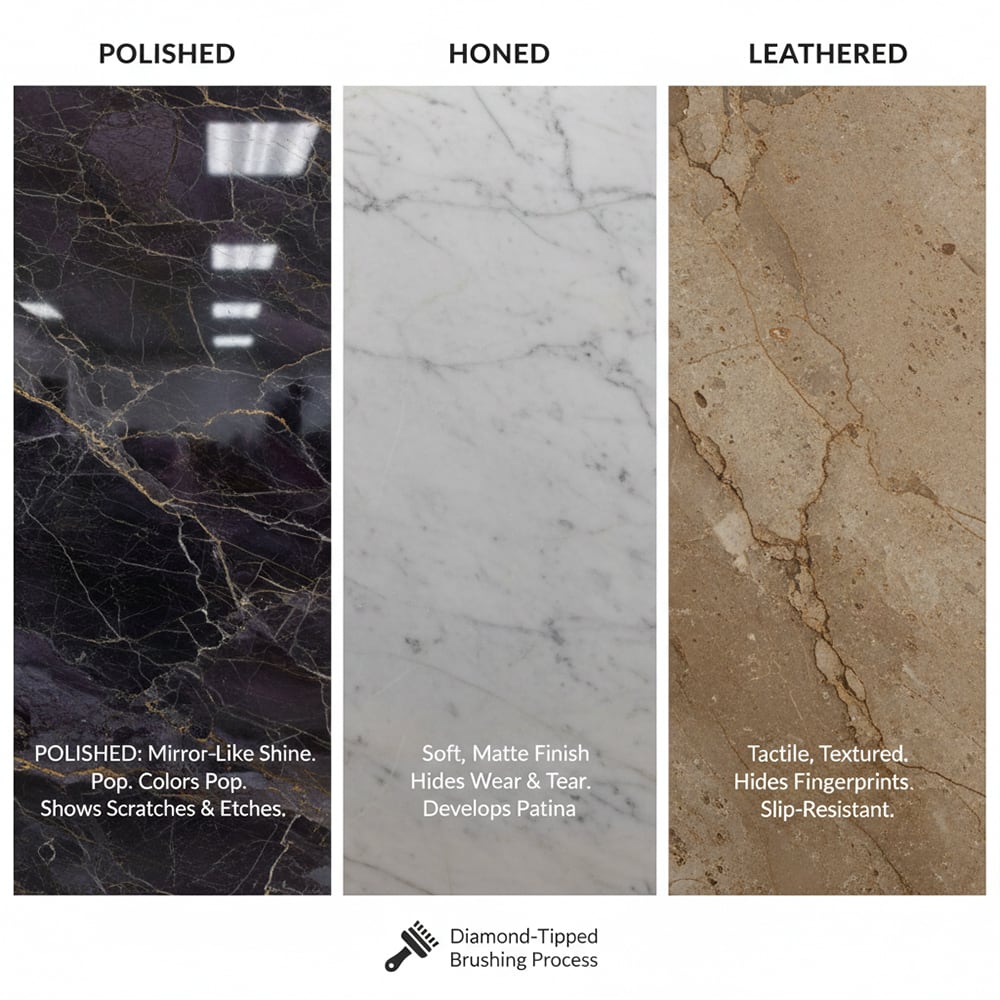
The finish you choose for your countertop can significantly affect its performance. A high polish creates a mirror like shine that makes the colors pop, but it also makes etch marks and scratches more visible, especially on marble. Many homeowners choose to hone their marble countertops. This creates a matte, velvety surface. A hone finish is excellent at hiding the wear and tear of aging and makes the inevitable patina look more intentional.
For quartzite, you have similar options, including a leather finish. A leather texture adds a tactile, slightly pebbled feel to the stone. This is fantastic for hiding fingerprints and water spots. Whether you are looking at quartzite vs marble, choosing a matte or textured finish can extend the life of the stone’s appearance and reduce the visual impact of daily use.
The leathering process involves brushing the stone with diamond tipped brushes. This removes the softer minerals and leaves the harder parts of the stone slightly raised. Not only does this look stunning, but it also increases the slip resistance of the stone, making it a popular choice for flooring or outdoor kitchens. A polished finish, while beautiful, requires the most vigilance to keep looking pristine.
7. How do Taj Mahal and Calacatta varieties compare in value?
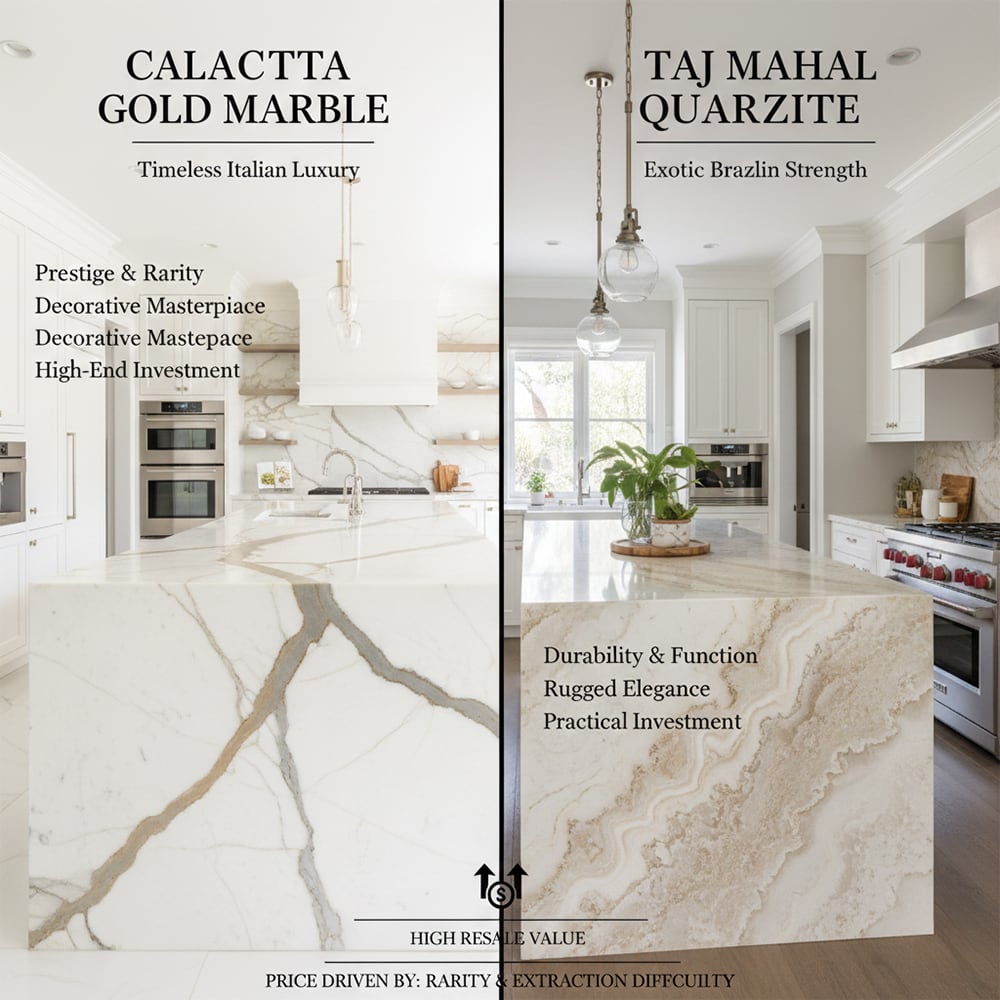
In the world of luxury surfaces, certain names carry more weight. Calacatta is often the most expensive variety of marble because of its rare, bold veining and bright white background. It is a decorative masterpiece that can anchor an entire room’s design. On the other hand, Taj Mahal quartzite is one of the most popular varieties of quartzite because it so closely resembles the soft, creamy tones of marble while remaining incredibly durable.
Both stones represent a significant investment. While granite used to be the default for high end homes, quartzite and marble have taken over the top spot for those seeking a specific aesthetic. Choosing between them often comes down to whether you value the prestige and history of a Calacatta marble or the functional strength and exotic beauty of a Taj Mahal quartzite.
The cost of these stones is driven by rarity and the difficulty of extraction. Because quartzite is so hard, it is much more difficult to cut and fabricate than marble. This often leads to higher labor costs. Marble, being softer, is easier to shape and detail, but the high demand for premium white slabs keeps the prices at the top of the market. When calculating the value, consider not just the purchase price, but the longevity and the potential increase in your home’s resale value.
8. Can you distinguish between quartzite vs marble vs quartz?
It is common to confuse quartzite with quartz, but they are entirely different products. Quartzite is a 100 percent natural stone mined from the earth. Quartz, however, is a man made engineered product consisting of crushed stone held together by resin. While quartz is non porous, it cannot match the natural, breathtaking variation found in a slab of marble or quartzite.
When looking at quartzite, it is also worth noting that some stones labeled as soft quartzite are actually dolomite. Dolomite is harder than standard marble but softer than true quartzite. It is important to work with a reputable showroom that can provide accurate testing to ensure you are getting the hardness and mineral composition you expect for your kitchen or bathroom.
The main difference between natural stone and engineered quartz lies in the heat resistance. Engineered quartz contains about 7 to 10 percent plastic resin. This resin can melt or discolor if a hot pan is placed directly on the surface. Quartzite and marble, being formed in the heat of the earth’s crust, have much higher thermal resistance. If you are a serious cook, the natural options generally provide a safer and more durable surface for high heat environments.
9. Does marble really develop a patina over time that adds value?
The concept of a patina is polarizing. In many cultures, the aging of a stone surface is seen as a mark of a well loved home. As marble encounters various elements, it subtly changes, losing its initial polish and gaining a lived-in character. For those who appreciate the timeless beauty of old European cafes, this patina over time is a desirable feature that adds soul to the space.
However, if you prefer your countertops to look brand new for twenty years, you will likely find the staining and etching of marble frustrating. In this case, quartzite is the better option. It maintains its original appearance much longer without the shifting character that defines marble. Understanding your personal perfection threshold is the key to choosing between these two metamorphic rocks.
A patina is essentially a record of the home’s life. It includes the faint shadow of a wine glass from a celebration or the slightly worn edge where bread is kneaded every Sunday. For some, these are flaws; for others, they are memories. If you view your home as an evolving space that should reflect the passage of time, marble is a poetic choice. If you view your home as a pristine gallery, the rigidity and permanence of quartzite will better suit your expectations.
10. Which stone should you choose for high traffic areas?
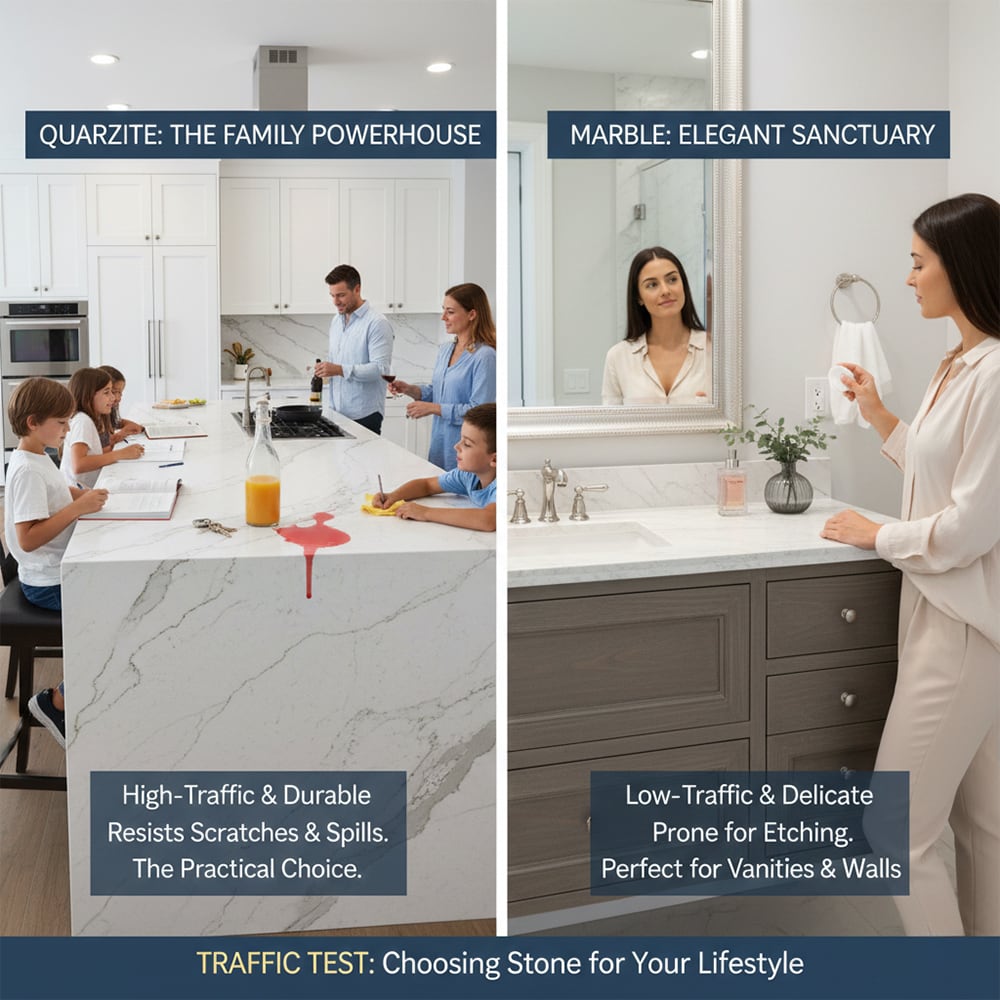
For high traffic areas like a main kitchen or a primary bathroom, the choice usually leans toward the most durable material. If you have a busy household with kids or love to host dinner parties, the quartzite vs marble debate is often won by quartzite. Its ability to resist the common hazards of daily use, from dropped keys to spilled wine, makes it a more practical companion for a hectic lifestyle.
That said, marble remains an excellent choice for lower traffic areas where its beauty can be admired without constant risk. Think of marble as a luxury silk suit: stunning and high status, but not something you wear to a construction site. Quartzite is more like a high end designer leather jacket: equally stylish, but built to withstand the elements.
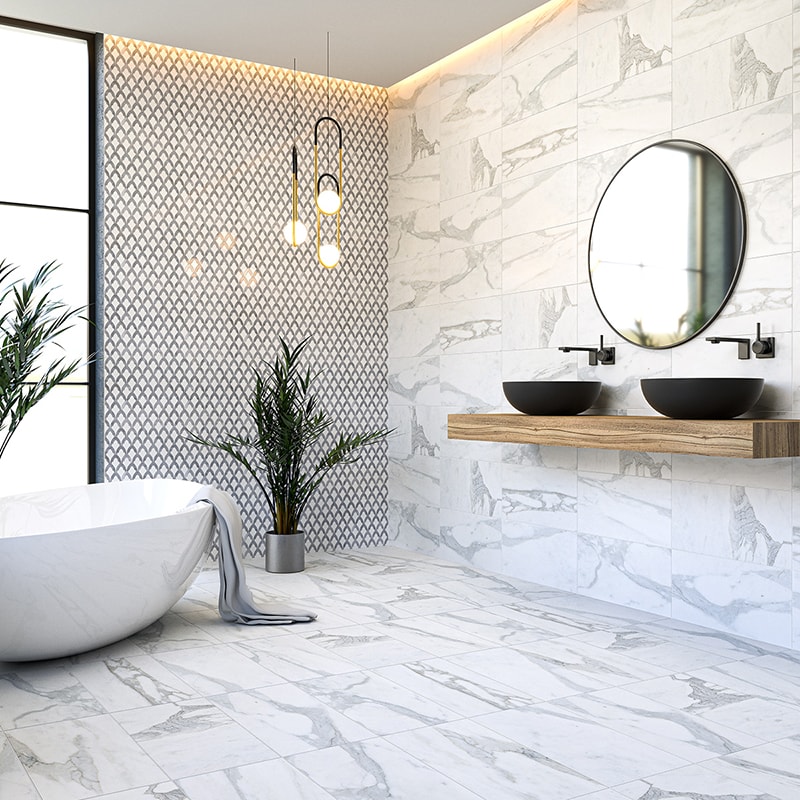
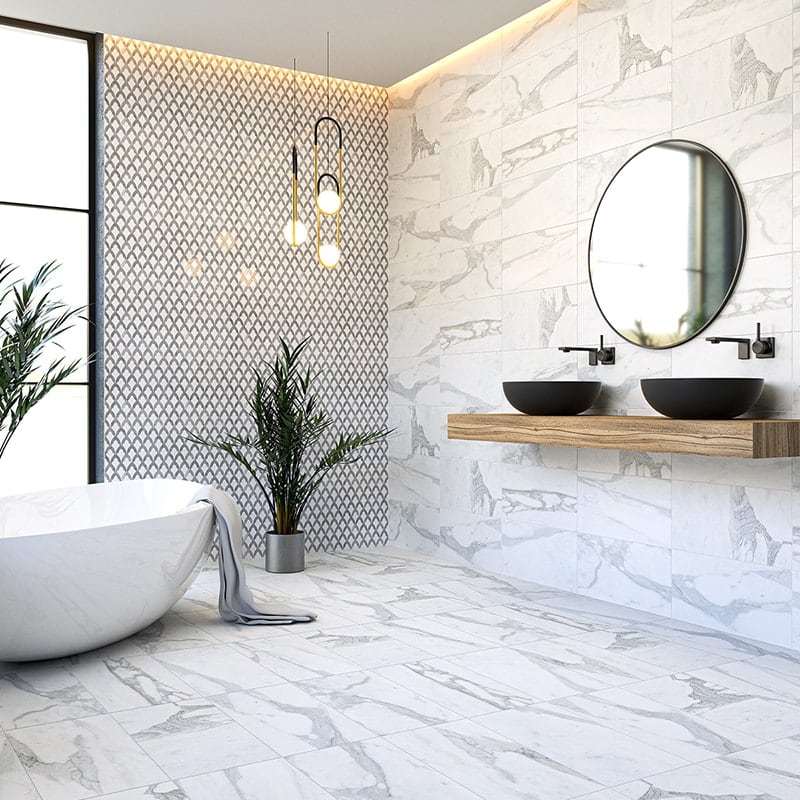
In bathrooms, marble is a very popular choice for walls and floors where it is less likely to come into contact with acidic substances. The steam and moisture of a bathroom do not harm marble as long as it is properly sealed. However, for a vanity top where toothpaste, perfumes, and makeup are used, quartzite might still be the safer bet to avoid staining and etching from the chemicals found in personal care products.
11. The environmental impact and sustainability of stone choice
As we move further into 2026, the sustainability of building materials has become a primary concern for many homeowners. Both marble and quartzite are natural resources that require significant energy to quarry and transport. However, their longevity often makes them more sustainable than synthetic alternatives that may need to be replaced every decade.
Marble has a very long history of being reused and repurposed. In many historic renovations, old marble slabs are salvaged, refinished, and given a second life. Quartzite is also incredibly durable, meaning it will likely stay in a home for the duration of the structure’s life. When choosing between these stones, consider the location of the quarry. Sourcing stone from local or regional quarries can significantly reduce the carbon footprint associated with shipping these heavy materials across the globe.
12. Installation considerations for quartzite and marble
The physical properties of these stones also affect the installation process. Quartzite is notoriously difficult to cut because of its extreme hardness. This requires specialized diamond tools and experienced fabricators who understand how to manage the tension within the stone. If the fabrication is rushed, quartzite can chip or crack during the cutting process.
Marble is much more forgiving for the fabricator. It can be easily shaped into intricate edge profiles, such as a double ogee or a complex mitered edge. This ease of workability is why you often see marble used for elaborate architectural details that would be too costly or difficult to achieve with quartzite. When planning your budget, always get a detailed quote for fabrication and installation, as these costs can vary significantly based on the stone’s hardness and the complexity of your design.
13. Summary of Key Differences
To help finalize your decision, let us summarize the core distinctions between these two magnificent materials. Quartzite is the powerhouse of the natural stone world, offering the hardness of granite with the aesthetic of marble. It is the best choice for those who prioritize function and low maintenance without sacrificing style.
Marble is the artist of the stone world. It offers a depth, translucency, and historical weight that no other material can match. It is the best choice for those who value the story of the stone and are willing to perform the necessary maintenance to keep it looking its best, or those who embrace the natural aging process of the material.
Both stones will add significant value and beauty to your home. Whether you choose the rugged elegance of quartzite or the classic luxury of marble, you are investing in a natural product that has taken millions of years to create. By understanding the geological, chemical, and aesthetic differences between them, you can choose the stone that perfectly aligns with your lifestyle and design vision for 2026 and beyond.
Key Takeaways for Your Stone Selection
- Hardness: Quartzite is significantly harder than marble on the Mohs scale. This makes it more resistant to a scratch and physical impact.
- Etching: Marble is highly prone to etching and staining from acidic substances due to its calcite composition. Quartzite is chemically stable and does not etch.
- Maintenance: Quartzite is generally low maintenance. Marble requires more frequent seal applications and the use of strictly pH neutral cleaning products.
- Aesthetics: Marble offers timeless elegance and a unique, soft glow with flowing veining. Quartzite provides a wider range of colors and more complex, often linear textures.
- Durability: For busy kitchens and high traffic areas, quartzite provides added durability against daily wear and tear.
- Finishes: Using a hone or leather finish can help both stones hide the effects of daily use, although a polished finish remains the most popular for showing off the stone’s color.
- Cost: Both are premium materials. Quartzite often has higher fabrication costs due to its hardness, while marble prices are driven by the rarity of specific high end varieties