Create a Marble Bathroom: Elegant Design Ideas Using Marble Tiles and Slabs
Last Updated On
Create a Marble Bathroom

Transforming your home starts with the most private of sanctuaries: the bathroom. In this comprehensive guide, we explore how to create a marble bathroom that exudes luxury and sophistication. Whether you are using a large slab of natural marble or versatile marble-look bathroom tiles, this article provides the inspiration and technical insight needed to elevate your next renovation. You will learn how to select the right materials, balance natural textures, and implement an elegant design that stands the test of time.

What Makes Marble the Ultimate Stone for a Modern Bathroom?

When considering a modern bathroom, few materials carry the same weight of history and elegance as natural marble. This unique stone has been the preferred choice for master builders for centuries, offering a visual depth that synthetic materials struggle to replicate. In a contemporary interior, the organic veining of a marble surface acts as a piece of functional art, ensuring that no two rooms ever look exactly the same.

The geological journey of marble contributes to its prestige. Formed through the recrystallization of limestone under intense heat and pressure, the resulting metamorphic rock possesses a crystalline structure that reflects light in a way that feels alive. Integrating marble into your interior design allows for a seamless transition between classic aesthetics and contemporary functionality. Because the material is naturally cool to the touch, it brings a sense of refreshing comfort to a high-heat space like a steam shower. By choosing natural marble, you are investing in a timeless concept that increases the long-term value of your home while providing a daily sense of luxury.

Beyond the physical properties, marble carries a psychological weight of permanence. When you walk into a bathroom clad in fine stone, there is an immediate sense of quiet and durability. This is not a trend that will fade within a decade. Instead, marble ages with grace, developing a patina that tells the story of the home. In the context of modern minimalism, marble provides the necessary texture to keep a room from feeling sterile. It introduces movement through its veins, providing a bridge between the rigid lines of modern architecture and the fluid beauty of the natural world.

How Do You Select the Best White Marble for Your Space?

To select the perfect white marble for your bathroom remodel, you must first understand the tone and veining patterns of different varieties. Natural stones vary from crisp, snowy whites to warmer, creamy hues. The planning phase of your design should account for how the light in your bathroom interacts with the stone. A brighter stone can make a smaller space feel more expansive and airy, while heavier veining adds a layer of sophisticated drama.

When evaluating material options, a designer will often suggest looking at the background color of the marble. For an elegant and clean style, look for stones with a consistent white marble base and minimal gray clouding. This essential step ensures that the floor and wall applications do not clash with your vanity or sink fixtures. Remember, the goal is to enhance the room’s natural light, creating a luxurious environment that feels both open and high-end.

Consider the source of the stone as well. Italian white marbles are often the gold standard due to their purity and historical significance. However, Greek and Turkish white marbles offer unique crystalline structures that might better suit a specific lighting condition. If your bathroom lacks natural windows, a very bright white stone with a high polished finish will help bounce artificial light around the room, preventing a claustrophobic feel. Conversely, in a room with floor to ceiling windows, a slightly warmer white can prevent the space from feeling too cold or clinical during the winter months.

Should You Choose a Solid Marble Slab or Marble-Look Porcelain Tile?

The debate between a solid slab and a marble-look porcelain tile often comes down to budget and durability. A large slab offers a floor to ceiling seamlessness that is breathtaking, especially in a grand master suite. It eliminates grout lines, creating a sleek surface that is easy to clean and visually uninterrupted. However, the weight and cost of a natural stone slab require specialized installation and structural support. The installation of a slab is a labor of love, requiring expert fabricators who can handle the immense weight and fragility of the stone before it is secured.

On the other hand, porcelain ceramic tile with a marble-look has become incredibly sophisticated. Modern digital printing allows these tiles to mimic natural marble so closely that it is often difficult to tell the difference. These bathroom tiles offer superior durability and resistance to moisture, making them an excellent idea for a high-traffic bathroom floor. Porcelain is non-porous, meaning it will not absorb water or beauty products, which can sometimes stain natural stone if not properly sealed.

For those seeking a timeless design without the maintenance of natural stone, porcelain is a highly effective material. It allows for the use of large format tiles that mimic the look of a slab but at a fraction of the weight and cost. This makes it an ideal choice for multi-story residential projects where the structural load of heavy stone slabs might be a concern. Ultimately, the choice depends on your priority: the authentic, one of a kind soul of natural stone or the practical, consistent performance of modern porcelain.

Can You Use Calacatta Gold to Add Luxury to Your Shower?

Calacatta gold is widely regarded as one of the most luxurious options in the world of interior design. Characterized by its bold, thick veining and distinct hints of gold and honey, it adds an instant warmth to the bathroom. Using this stone in a shower creates a stunning focal point, especially when the veins are book-matched across the wall. Book-matching involves taking two sequential slabs of stone and installing them side by side so that the veining mirrors each other, creating a symmetrical pattern that looks like an open book.

This design element transforms a standard utility into a high-end spa experience. To further elevate the space, consider incorporating a mosaic of Calacatta in a recessed niche. The pairing of large tiles on the wall with smaller mosaic patterns on the shower floor provides necessary slip resistance while maintaining a cohesive style. The presence of gold tones within the stone also allows you to experiment with brass or champagne bronze faucets, creating a sophisticated and classic look that feels warm rather than clinical.

When using Calacatta gold in a wet environment like a shower, it is vital to ensure proper sealing. Because marble is a calcium-based stone, it can be sensitive to acidic soaps or hard water. However, with the right maintenance routine, the golden veins will continue to glow for decades. The warmth of the gold accents makes this marble particularly effective in homes with a traditional or transitional style, as it bridges the gap between the cool gray of typical marble and the warm wood tones often found in classic furniture.

Is Carrara Bianco Still the Most Classic Idea for Bathroom Floors?

Carrara bianco remains the quintessential choice for those who love classic interior design. This stone is famous for its soft, feathery blue-gray veining and consistent greyish-white background. When used as a bathroom floor, it provides a neutral yet elegant foundation that works with almost any color palette. Whether you are going for a contemporary or antique aesthetic, Carrara offers a level of versatility that few other stones can match.

Using Carrara in a subway tile format on the wall is a fantastic design ideas staple for a modern bathroom. It bridges the gap between old-world elegance and modern simplicity. Because it is so widely available, you can often find a complete collection of accessories, from sink basins to threshold strips, ensuring a unified look throughout the entire renovation. It is the ultimate material for achieving a high-end look that never goes out of fashion.

The beauty of Carrara bianco lies in its subtlety. Unlike the more aggressive veining of Statuario or Calacatta, Carrara provides a misty, ethereal quality. This makes it particularly well-suited for smaller bathrooms where a loud pattern might feel overwhelming. When paired with charcoal gray cabinetry or even navy blue accents, Carrara bianco creates a crisp, nautical elegance that feels incredibly fresh. It is the safe but stunning choice for those who want their bathroom to feel like a five-star hotel suite.

How Does Nero Marquina Create a Bold Interior Design Statement?

For those who want to move away from traditional whites, Nero marquina offers a dramatic alternative. This deep black marble with stark white veins creates a striking visual contrast that is perfect for a modern bathroom. Using it on a vanity top or as a feature wall adds a sense of grand mystery and luxury. It is a bold design choice that communicates a high level of confidence in one’s interior style.

When working with marquina, it is important to balance the dark stone with enough light. A dual lighting scheme, combining natural light with bright LED fixtures, ensures the space does not feel cramped. You might also consider a polished finish to help reflect light off the dark surface. This stone is particularly effective in a powder room or a secondary bathroom where you want to make a lasting impression on guests.

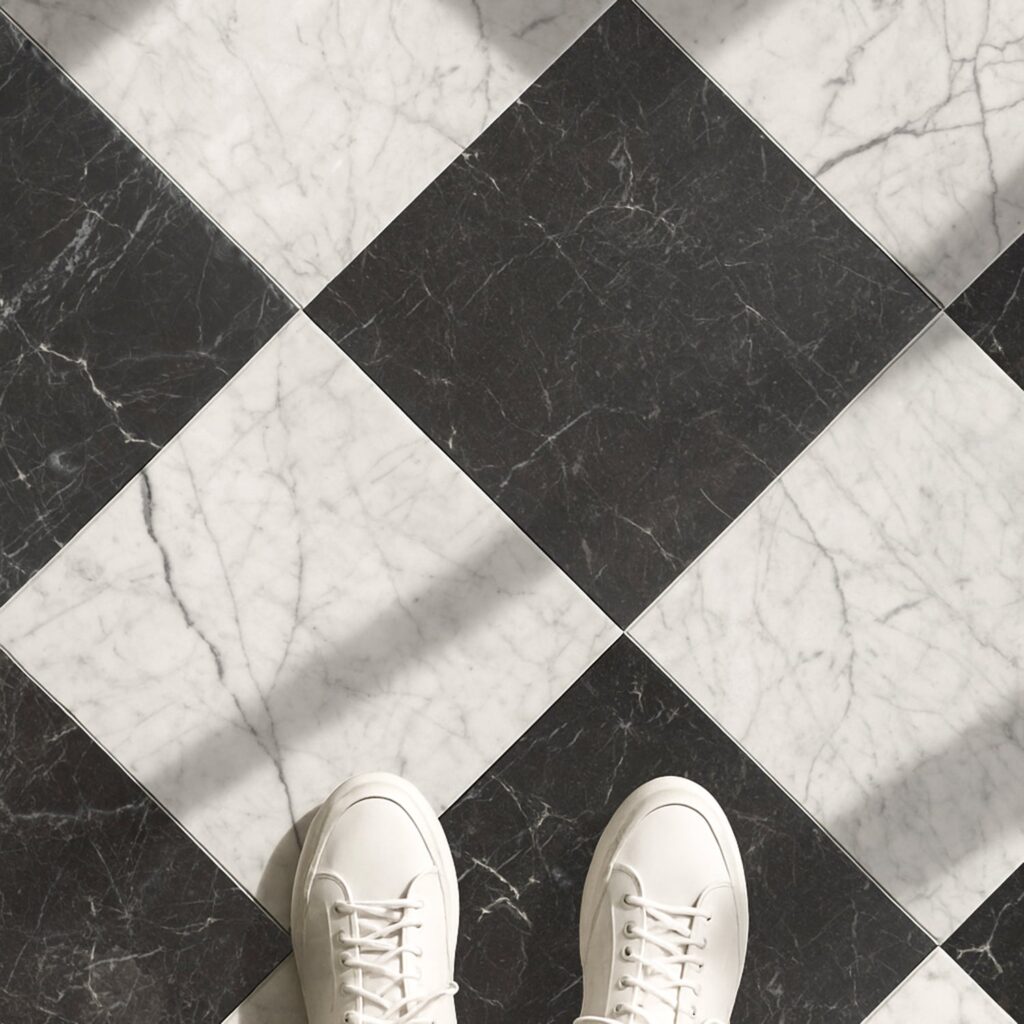
Pairing Nero marquina with white marble is another way to utilize its potential. A checkerboard floor using both black and white marble is a classic design that has seen a massive resurgence in modern luxury homes. The black stone grounds the room, while the white stone keeps the energy high. If you are feeling adventurous, using Nero marquina for a custom-carved integrated sink can create a sculptural element that becomes the primary conversation piece of your home renovation.

Why Consider Statuario or Viola Stone for a Grand Vanity?

Statuario is often considered the big brother to Carrara, featuring much more dramatic and sparse veining that makes a grand statement. It is the perfect material for a custom vanity or a standalone bathtub surround. Because of its rarity and beauty, it is often used as a centerpiece element in luxurious bathroom designs. The crisp white background helps the darker veins pop, creating a sense of movement across the stone.

Alternatively, Breccia Viola is gaining popularity among those looking for a unique color tone. With its deep burgundy and purple veining, it offers a rich, antique feel that is incredibly sophisticated. Incorporating Viola into your bathroom design adds a layer of artistic flair. It works beautifully when used as a solid slab for a backsplash, providing a textured, organic backdrop that feels both contemporary and historic.

The choice between these two often depends on the desired mood. Statuario feels regal and expansive, perfect for a bright, airy master bath. Viola feels more intimate and artistic, lending itself to a space meant for relaxation and long baths. When you use such high-character stones for a vanity, it is best to keep the rest of the room relatively simple. Let the stone be the hero of the story, and choose minimalist fixtures that do not compete with the natural patterns of the marble.

What Are the Best Tips for Pairing Blue or Verde Marble with Wood?

If you want to introduce color, blue or verde (green) marble can provide a stunning inspiration. A blue toned stone evokes the calmness of water, making it a natural fit for a bathroom environment. To prevent the stone from feeling too cold, a common tip is to pair it with wood elements. The warmth of oak or walnut cabinetry provides a perfect organic balance to the cool, hard surface of the marble.

This pairing of natural materials creates a biophilic design that promotes relaxation and comfort. For instance, a verde marble vanity set against an oak accent wall brings the colors of the forest into your home. This style is particularly popular in modern bathroom designs that aim to create a spa-like retreat. By mixing the textures of stone and wood, you enhance the sensory experience of the space.

Consider the grain of the wood when making your selection. A straight, vertical grain in walnut can mirror the linear veining in certain marble slabs, creating a sense of height and order. If you are using a very busy green marble with lots of circular movement, a more rustic wood with knots and character can complement that organic energy. This approach moves away from the clinical feel of all-white bathrooms and creates a space that feels lived-in and deeply connected to nature.

Can Antique or Polish Finishes Work in Commercial and Residential Spaces?

The choice of finish, antique (honed) or polished, greatly affects the mood of the marble bathroom. A polished finish is highly reflective, making colors more vibrant and the space feel brighter. This is a popular choice for commercial settings like luxury hotels where a wow factor is required. However, in a residential shower, a high polish can be slippery, so it is often reserved for walls or low-traffic areas.

An antique or honed finish offers a matte look that is smooth to the touch but not shiny. This finish is excellent for a bathroom floor because it provides better slip resistance and hides water spots more effectively than a high-gloss surface. Many designers now mix these finishes within the same collection to add depth. For example, using a polished slab on the wall and a honed tile on the floor creates a subtle, sophisticated contrast that works in both commercial and home environments.

In commercial spaces, durability and safety are paramount. A leathered finish is another option that provides even more texture and slip resistance while still maintaining the stone’s natural color. For a home bathroom, you might choose a polished finish for the vanity to emphasize the stone’s luxury, while using a honed finish for the floors to ensure safety for family members. Understanding these finishes allows you to customize the functionality of your marble without sacrificing its aesthetic appeal.

How Do Dual Textures and a Large Format Collection Enhance a Small Bathroom?

In a smaller bathroom, the way you use marble can drastically change the perception of the space. Using a large format tile or a slab reduces the number of grout lines, which trick the eye into seeing a larger, continuous surface. This design concept is essential for creating an uncluttered, modern look. When you select tiles that go from floor to ceiling, you emphasize the height of the room, making it feel more grand.

Explore the use of dual textures to add interest without overwhelming the room. For example, you might use a large marble-look porcelain tile on the main floor and a matching mosaic inside the shower niche. This keeps the color palette simple while adding enough decorative variety to keep the design engaging. By focusing on a single, high-quality stone collection, you ensure that even a small bathroom feels like a cohesive, luxurious sanctuary.

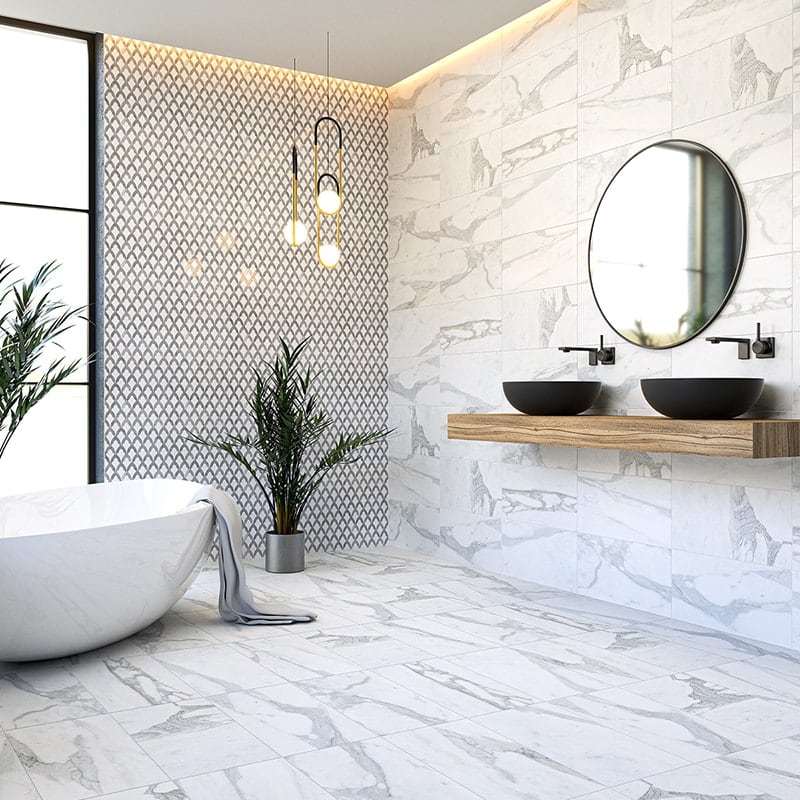
Lighting also plays a critical role in small marble bathrooms. Recessed lighting that washes down the marble walls can highlight the veining and create a sense of depth. If you have a small window, placing a large mirror opposite it will reflect both the light and the marble patterns, effectively doubling the visual size of the room. Small spaces do not have to mean small ideas. In fact, a small bathroom is often the best place to use a more expensive, high-end marble because the total square footage required is lower.

The Importance of Maintenance and Longevity in Marble Design

Creating a marble bathroom is an investment that requires a commitment to proper care. Because marble is a natural, porous stone, it can be susceptible to etching from acidic substances and staining from oils. However, modern technology has made maintaining marble easier than ever before. High-quality penetrating sealers can protect the stone for years, preventing moisture from seeping into the pores.

Regular cleaning should be done with pH-neutral cleaners specifically formulated for natural stone. Avoid using harsh chemicals or abrasive scrubbing pads, as these can dull the finish over time. If you choose a honed finish, you will find that it is much more forgiving of everyday wear and tear. Over time, some homeowners even welcome the natural aging of the stone, viewing the slight changes in texture as a mark of authenticity and history.

Furthermore, the longevity of marble is unmatched. Unlike fiberglass or acrylic tub surrounds that may crack or yellow over time, marble remains structurally sound for generations. If a marble surface ever becomes too scratched or stained, it can be professionally refinished and restored to its original glory. This sustainability factor is often overlooked. Choosing a material that lasts for a lifetime is ultimately more environmentally friendly than choosing synthetic materials that require frequent replacement and disposal.

Future Trends in Marble Bathroom Design

As we look toward the future of interior design, we see a shift toward more expressive and colorful marbles. While white and gray remain staples, designers are increasingly experimenting with pink, burgundy, and even onyx-like green marbles. These stones are being used as architectural accents, such as floating marble benches in showers or integrated marble shelving. The trend is moving away from purely functional spaces and toward rooms that evoke emotion and personality.

Another emerging trend is the use of textured or fluted marble. Carving ridges into the surface of a marble slab adds a tactile dimension that is incredibly modern. This technique is often used on the front of vanities or as a feature wall behind a freestanding tub. The play of shadow and light on the fluted surface creates a dynamic look that changes throughout the day.

Finally, the integration of smart technology with marble is becoming more common. Heated marble floors have become a standard in luxury renovations, providing a level of comfort that is essential in colder climates. Some high-end designs even incorporate hidden touch sensors behind thin marble panels to control lighting and sound systems, maintaining the clean lines of the stone while offering the convenience of modern technology.

Important Things to Remember

  • Select the right variety: Carrara is classic, while Calacatta gold adds high-end warmth.
  • Balance natural marble with other materials like wood or oak to add comfort.
  • Consider durability: Marble-look porcelain is a great idea for high-traffic floors.
  • The format matters: Large tiles or a slab make a smaller space feel much larger.
  • Don’t forget the finish: Use a polished finish for walls and a honed or matte finish for the floor.
  • Planning is key: Ensure your bathroom remodel accounts for the weight of natural stone.
  • Elevate your shower with a book-matched wall or a custom mosaic niche.
  • Invest in quality sealers to protect your stone from moisture and stains.
  • Think about lighting: Properly placed lights can emphasize the depth of marble veining.
  • Embrace natural variations: No two slabs of marble are identical, which is part of their charm.

Creating a marble bathroom is about more than just picking a tile. It is about crafting an atmosphere of permanence and beauty. By understanding the different types of stone, the importance of finishes, and the way light interacts with natural minerals, you can create a sanctuary that serves as a peaceful retreat from the outside world. Whether you prefer the bold drama of Nero marquina or the soft elegance of Carrara, marble offers a canvas upon which you can paint your vision of luxury.

< >